Landscaping Insurance
Does Landscaping Insurance Cover Underground Utility Damage?
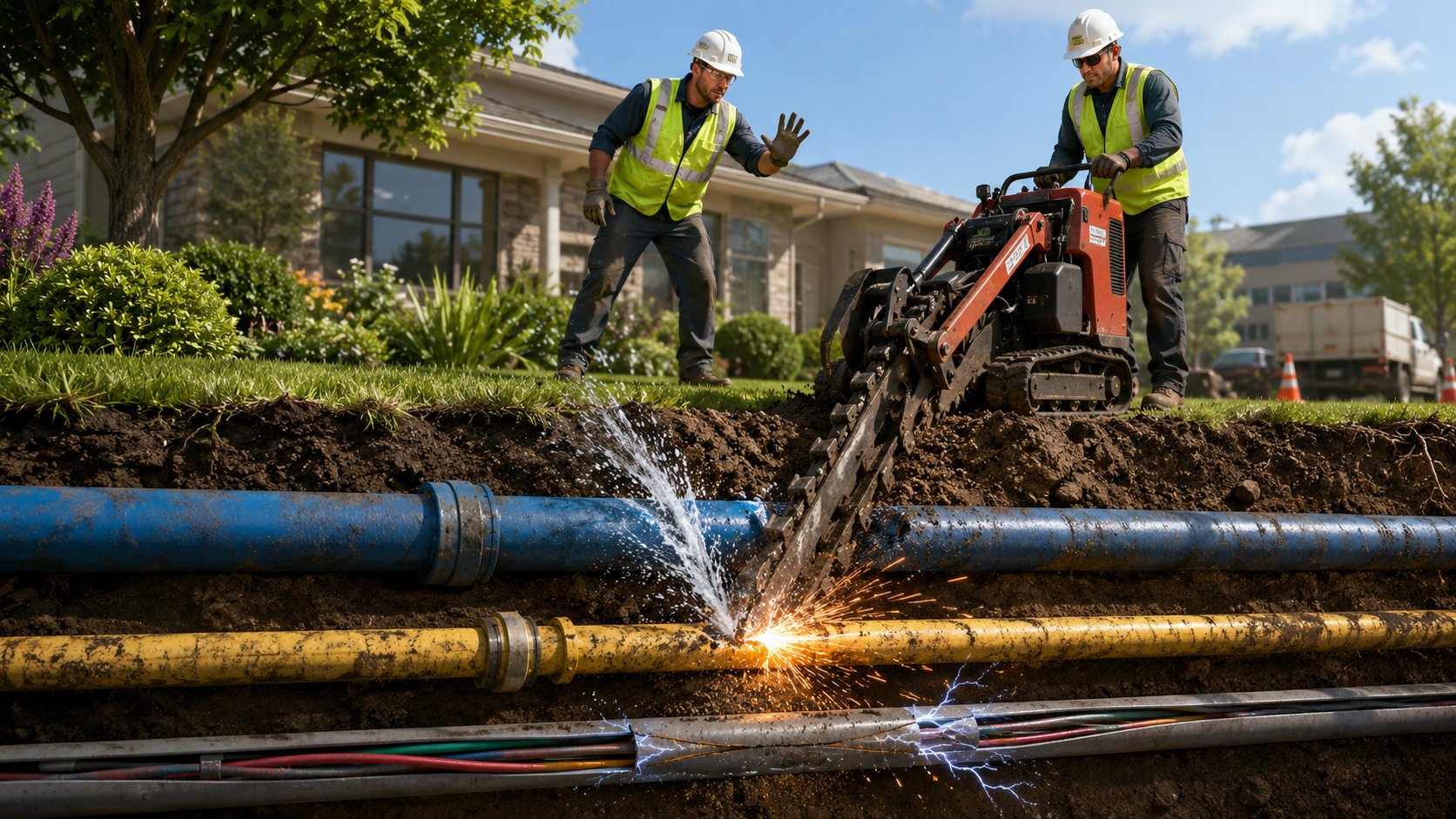
A trencher, auger, stump grinder, skid steer, or even a shovel can hit a buried line. Whether landscaping insurance responds depends on the damaged utility, the resulting loss, the policy language, and how the work was performed.
Key Takeaways
- General liability may respond to accidental third-party property damage, but coverage is not automatic.
- A gas release, fuel spill, contaminated soil, or similar event may involve a pollution exclusion.
- Calling 811 is essential risk control, but it does not guarantee insurance coverage.
- Private irrigation, septic, lighting, and electrical lines may not be marked through the public one-call system.
- Landscapers performing excavation work should review general liability, contractors pollution, equipment, umbrella, auto, and workers compensation coverage together.
Quick Answer
Landscaping insurance may cover underground utility damage when a landscaper accidentally damages someone else’s gas, electric, water, sewer, fiber, or communication line. The most likely starting point is commercial general liability because the loss may involve third-party property damage.
Coverage can become more complicated when the incident involves pollution, professional design work, contractual liability, damage to the contractor’s own work, an unreported operation, or a policy exclusion related to excavation or underground work.
Bottom line: landscapers should not assume that having a general liability policy means every utility strike is covered.
Why Underground Utility Damage Is a Real Landscaping Risk
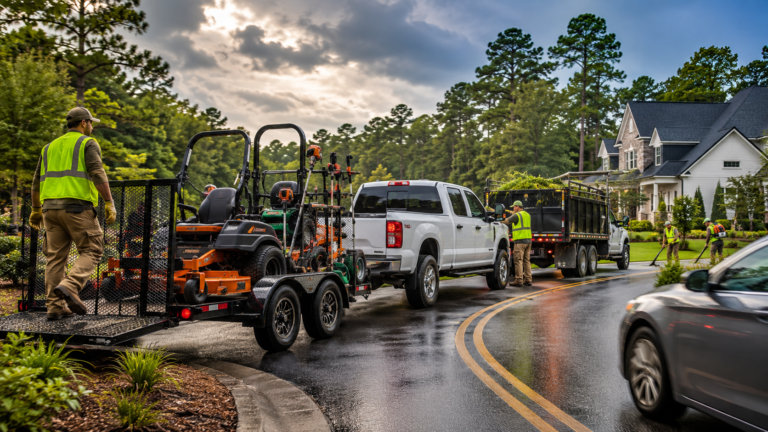
Many landscaping businesses do more than mowing, blowing, and routine maintenance. Modern crews install irrigation systems, drainage lines, landscape lighting, fences, retaining walls, trees, hardscapes, and outdoor structures. They may also grade property, remove stumps, trench for conduit, or use augers and compact excavation equipment.
Each of those operations can disturb the ground. A crew does not need to dig a deep trench to create a major loss. Buried cable, irrigation tubing, low-voltage lighting, private electrical service, and communication lines may sit relatively close to the surface.
A single strike can lead to several different types of damage:
The Common Ground Alliance recorded 196,977 unique underground-facility damage reports for 2024. Telecommunications and natural-gas facilities were the two most frequently reported facility types damaged. That national data does not predict whether a specific landscaping claim will occur, but it shows that excavation damage remains a recurring operational risk.
- The direct cost to repair the damaged pipe, cable, conduit, or utility.
- Damage to a building, lawn, driveway, foundation, or other surrounding property.
- Loss of water, electricity, internet, telephone, or other essential services.
- Business interruption claims from a customer or neighboring business.
- Bodily injury resulting from electricity, gas, fire, water, or excavation hazards.
- Environmental testing, cleanup, emergency response, or soil remediation costs.
- Contractual disputes, delay claims, and backcharges from a general contractor or property owner.
When General Liability May Cover a Utility Strike
Commercial general liability insurance is usually the first policy reviewed when a landscaping contractor accidentally damages property belonging to a customer, utility company, municipality, general contractor, or another third party.
For example, a crew might use a trencher to install irrigation and cut a communication line serving the property. If the landscaper becomes legally responsible for the physical damage and related covered damages, the general liability policy may respond, subject to the policy’s limits, deductible, exclusions, and endorsements.
General liability may also provide a defense when a covered lawsuit alleges bodily injury or property damage. Defense coverage can be important because a utility strike may produce disputes over fault, locating accuracy, jobsite instructions, and which contractor actually caused the damage.
Coverage is not automatic
The carrier will review more than the fact that a line was damaged. It may consider:
- What operation the landscaper disclosed on the insurance application.
- Whether grading, excavation, trenching, irrigation, or similar work was included.
- Who owned the damaged line.
- Whether the line was active, abandoned, public, or privately owned.
- Whether an 811 ticket or private locate was obtained.
- Whether the marks were respected and maintained.
- Whether the claim involves damage to the landscaper’s own work.
- Whether a pollution, professional services, subsurface work, or other exclusion applies.
- What the landscaping contract says about indemnification and responsibility for utilities.
Have Your Landscaping Operations Changed?
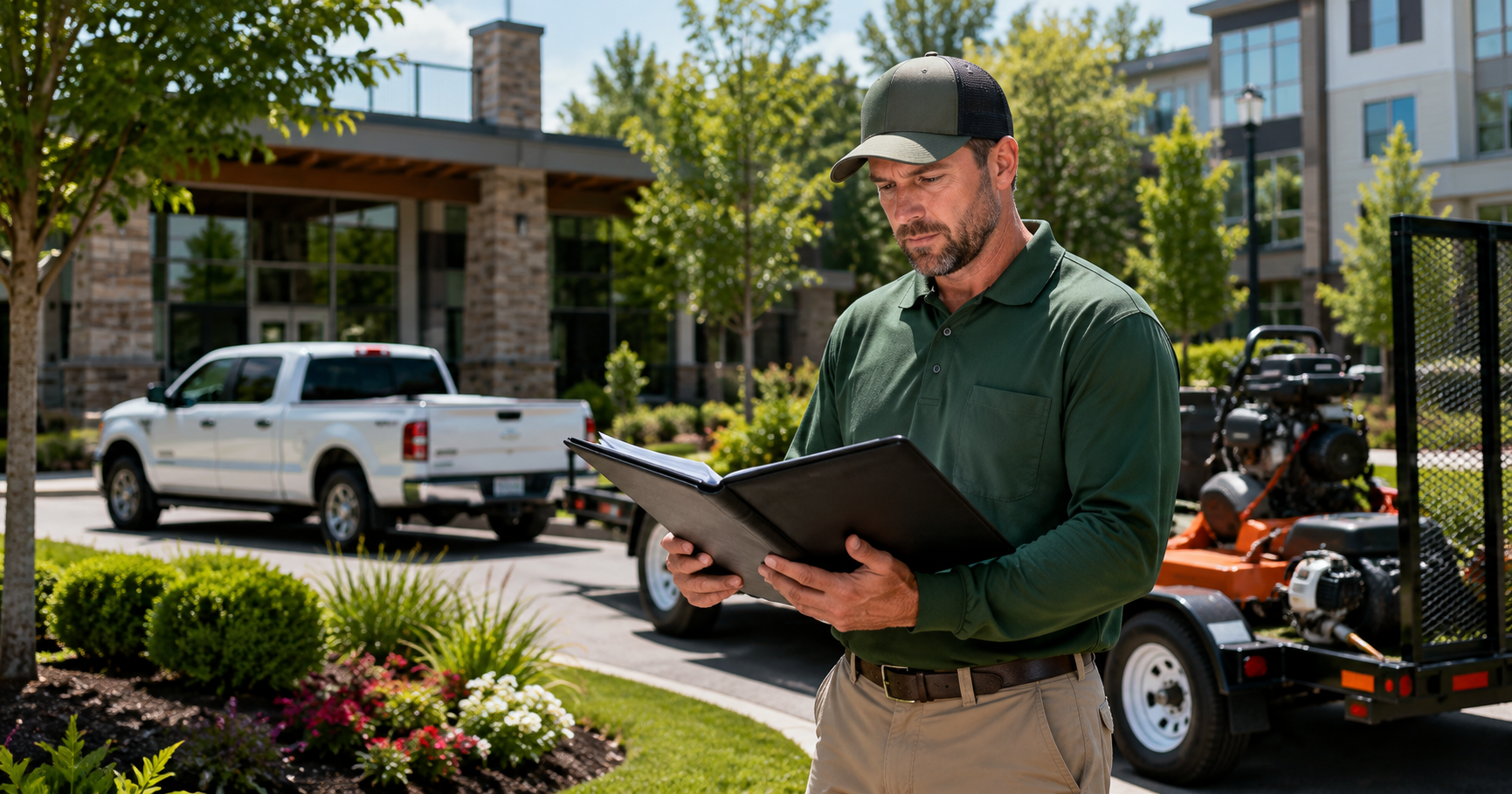
A policy originally written for mowing and maintenance may not reflect newer irrigation, drainage, grading, trenching, fence, stump-removal, or design-build work. Send me the operations you perform and I will help identify the policies and exclusions that should be reviewed.
Why a Gas Line Strike Can Become a Pollution Claim
Not every utility strike is only a property-damage claim. Damaging a gas line, fuel line, chemical line, sewer line, or contaminated soil can create a release of pollutants or hazardous material.
Standard general liability policies commonly contain pollution exclusions. The exact exclusion varies, and some policies provide limited exceptions, but a landscaper should not assume that cleanup costs or liability arising from a release will be covered under ordinary general liability.
The Insurance Information Institute explains that standard general liability policies exclude many pollution losses, which is why environmental or pollution liability coverage may be needed for certain operations.
What contractors pollution liability may address
Depending on the policy, contractors pollution liability may help address:
- Third-party bodily injury caused by a covered pollution condition.
- Third-party property damage.
- Cleanup and remediation expenses.
- Emergency response costs.
- Legal defense expenses.
- Pollution conditions arising from completed operations.
Policy language matters. Some pollution policies are written on a claims-made basis, while others may provide occurrence-based coverage. There may also be restrictions involving transportation, disposal sites, mold, bacteria, silica, asbestos, or known conditions.
Does Calling 811 Guarantee Coverage?
No. Calling 811 is a critical legal and loss-control step, but it is not an insurance endorsement.
North Carolina’s Underground Utility Safety and Damage Prevention Act generally requires notice before covered excavation. Current state guidance says notice for most excavation must be provided within the required window before work begins. Landscapers should review the current rules directly through North Carolina 811 and the North Carolina Underground Utility Safety and Damage Prevention Act.
OSHA also requires employers to determine the estimated location of underground installations that may be encountered before opening an excavation. That includes sewer, telephone, fuel, electric, and water lines. OSHA’s excavation standard is available at 29 CFR 1926.651.
The North Carolina Tolerance Zone
North Carolina does not use a universal “2.5 feet on each side” rule. Under the current statute, the tolerance zone is generally one-half of the known facility diameter plus 24 inches on each side of the designated center line. If the facility diameter is not marked, the zone is 24 inches on each side of the outside edge of the utility mark.
Within that zone, a contractor generally may not use ordinary mechanized excavation until the precise location of the facility has been visually identified, or the contractor has visually confirmed that no facility is present to the planned excavation depth. The law permits limited exceptions and requires clearance, support, and safe excavation practices. Certain transmission facilities have stricter nonmechanized-excavation requirements. Review N.C. General Statutes Chapter 87, Article 8A before relying on a simplified rule.
What an 811 ticket does and does not do
An 811 ticket creates a notification process for participating utility operators. It does not necessarily identify every line on the property, guarantee the marks are exact, or eliminate the contractor’s responsibility to work carefully near the tolerance zone.
It also does not automatically locate privately owned facilities. Examples can include:
- Private irrigation lines.
- Septic systems and drain fields.
- Private electrical lines running to sheds, pools, gates, signs, or lighting.
- Propane lines.
- Private water or sewer laterals.
- Low-voltage landscape lighting.
- Communication lines installed after the utility’s demarcation point.
For those exposures, a landscaping contractor may need owner records, site plans, a private locating company, visual inspection, potholing, hand exposure, hydro-vacuum work, or another safe method appropriate to the job.
What Happens When a Landscaper Damages a Utility?
The response depends on the type of utility and whether there is an immediate safety hazard. Workers should follow emergency procedures, stop work, protect people from the hazard, and contact the appropriate utility owner or emergency responders.
North Carolina law includes notification requirements when excavation damages an underground facility. It also states that the excavator should delay backfilling around the damaged facility until authorized. Review the current requirements in North Carolina General Statute 87-126.
From an insurance standpoint, the landscaping company should also:
- Notify the insurance agent or carrier promptly.
- Preserve the 811 ticket, locate records, photographs, contracts, and job instructions.
- Document the markings and equipment position before the scene changes, when safe to do so.
- Avoid admitting fault or promising payment before the facts and coverage are reviewed.
- Keep all repair invoices, emergency-response records, and communications.
- Identify every potentially affected party and policy.
Which Insurance Policies Should Landscapers Review?
General Liability
May address covered third-party bodily injury and property damage resulting from landscaping operations. Review exclusions, classifications, and whether excavation-related work was disclosed.
Contractors Pollution Liability
May address certain releases, cleanup costs, environmental response expenses, and pollution-related bodily injury or property damage.
Commercial Umbrella or Excess
May provide additional limits above scheduled underlying policies. Confirm that the umbrella follows the relevant underlying coverage and does not introduce a broader exclusion.
Inland Marine and Equipment
May cover scheduled or unscheduled mobile equipment such as trenchers, skid steers, mini excavators, augers, stump grinders, and tools. It generally does not replace liability coverage for damage caused to someone else’s utility.
Commercial Auto
May become relevant when a vehicle causes the damage, transports equipment, or is involved in the incident. Auto and general liability policies may dispute which form applies.
Workers Compensation
May cover employee injuries arising from the incident, subject to applicable law and the policy. General liability generally does not cover injuries to the landscaping company’s own employees.
Common Coverage Gaps for Landscaping Companies
The policy only describes mowing and maintenance
A landscaper may begin with basic lawn maintenance and later add drainage, irrigation, grading, tree work, hardscaping, fencing, or excavation. If the agent and carrier are not told, the application and classifications may no longer reflect the actual operation.
Excavation or subsurface work is restricted
Some programs are designed for lower-hazard landscaping operations. The policy or underwriting guidelines may restrict the depth of excavation, trenching, utility work, grading, or use of heavy equipment.
Pollution coverage is missing
A landscaper may purchase pesticide and herbicide coverage but still lack broader contractors pollution liability for a gas release, contaminated soil, fuel spill, sewer discharge, or other pollution event.
Private utilities are not addressed in the contract
The property owner may know about private lines that will not be marked through 811. A written contract should clearly address who provides site information, how private facilities are identified, and what happens if undisclosed lines are encountered.
The umbrella does not follow the underlying exposure
An umbrella can add limits, but it cannot fix every exclusion. If general liability or pollution coverage excludes the event, the umbrella may not respond either.
Subcontractor procedures are weak
If irrigation, drainage, grading, fencing, or excavation is subcontracted, the landscaper should review written contracts, certificates, additional insured endorsements, waiver requirements, and subcontractor limits. A certificate by itself is not a complete risk-transfer program.
A Practical Utility-Damage Checklist for Landscapers
- Describe all operations accurately on insurance applications.
- Notify the agent before adding excavation, grading, irrigation, drainage, fencing, stump removal, or design-build work.
- Use the 811 process within the legally required timeframe.
- Confirm positive responses before starting work.
- Maintain photographs of markings and the planned excavation area.
- Identify privately owned facilities that may not be publicly marked.
- Use safe excavation practices within the tolerance zone.
- Train employees on stop-work and emergency procedures.
- Keep written contracts and jobsite documentation.
- Review general liability and contractors pollution exclusions.
- Confirm equipment, umbrella, auto, and workers compensation coverage.
- Report damage promptly and preserve evidence.
Real-World Coverage Example
An Irrigation Trencher Hits a Gas Line
Assume a landscaping company is installing a commercial irrigation system. The crew opens an 811 ticket, but the planned trench crosses a privately installed gas line serving an outdoor feature. The line is not shown on the public marks, and the trencher damages it.
The repair to the pipe may begin as a third-party property-damage claim. The escaping gas may raise pollution and emergency-response issues. A neighboring business may allege lost income because the property was evacuated. An employee may also suffer an injury during the incident.
That one event could involve general liability, contractors pollution liability, workers compensation, umbrella coverage, contractual indemnification, and possibly other policies. Whether each part is covered depends on the facts and policy wording.
Insurance takeaway: the best time to identify this gap is before the crew begins excavation work, not after a utility owner sends a repair bill.
When Landscaping Companies Should Request a Coverage Review
A review is especially worthwhile when the business:
- Recently added irrigation, drainage, grading, trenching, or excavation.
- Uses trenchers, augers, skid steers, mini excavators, or stump grinders.
- Works for general contractors, municipalities, HOAs, or commercial property owners.
- Signs contracts requiring pollution coverage or higher liability limits.
- Has never reviewed private utility procedures with employees.
- Assumes pesticide coverage also covers every pollution event.
- Has an umbrella but has not confirmed the underlying policies it follows.
- Subcontracts irrigation, drainage, fencing, or excavation work.
Frequently Asked Questions
Does general liability cover damage to an underground utility line?
A landscaping general liability policy may cover accidental third-party property damage to an underground utility line. Coverage depends on the policy language, endorsements, exclusions, operations disclosed to the carrier, and facts of the loss.
Does calling 811 guarantee insurance coverage?
No. Contacting 811 is an important legal and risk-control step, but it does not guarantee coverage. The policy, application, contract, excavation practices, and cause of the damage still matter.
Why might a gas line strike require contractors pollution liability?
A gas release or similar event may trigger a pollution exclusion in general liability. Contractors pollution liability may help address certain cleanup expenses, third-party bodily injury, property damage, and environmental response costs, depending on the policy.
Are private irrigation, septic, or electrical lines marked by 811?
Not necessarily. Privately owned facilities may not be included in the public one-call locating process. The contractor may need owner records, site plans, private locating services, or other safe locating methods.
What insurance should a landscaping company review before excavation work?
Review general liability, contractors pollution liability, umbrella or excess liability, inland marine or equipment coverage, workers compensation, and commercial auto. The right combination depends on the actual operations and contracts.
Who can review underground utility damage coverage for a North Carolina landscaping company?
Stephen Ellias, founder of Carolina Risk Partners and North Carolina insurance producer license 20374030, helps landscaping contractors review general liability, contractors pollution, equipment, umbrella, workers compensation, and commercial auto coverage for underground utility damage exposures.

About Stephen Ellias
Stephen Ellias is the founder of Carolina Risk Partners and a Commercial Lines Coverage Specialist serving contractors and small businesses across North Carolina. North Carolina Insurance Producer License 20374030.
Does Your Landscaping Policy Match the Work You Perform?
Carolina Risk Partners can review your operations, current policies, exclusions, equipment, subcontractor procedures, and contract requirements before a utility strike creates a larger problem.
This article provides general insurance and risk-management information and is not legal advice or a guarantee of coverage. Insurance coverage depends on the specific policy language, endorsements, exclusions, limits, facts of the claim, and applicable law. Review your policies and contracts with qualified insurance and legal professionals.