Landscaping Insurance Guide
Pesticide and Herbicide Liability Insurance for Landscapers: What General Liability May Not Cover
Chemical drift, overspray, runoff, spills, and accidental exposure can create claims that look like ordinary property damage or bodily injury. A standard general liability policy may treat the chemical involved as a pollutant and exclude the claim.
Key Takeaways
- General liability may not automatically cover chemical drift, overspray, runoff, or pesticide exposure.
- A pollution exclusion can apply even when the claim involves bodily injury or property damage.
- Applicator coverage may need to be added by endorsement or written under a separate pollution policy.
- Employee chemical exposure normally belongs under workers compensation.
- Commercial auto and umbrella policies should also be reviewed.
Quick Answer
Pesticide and herbicide liability insurance for landscapers can address chemical-application claims that may fall outside ordinary general liability coverage.
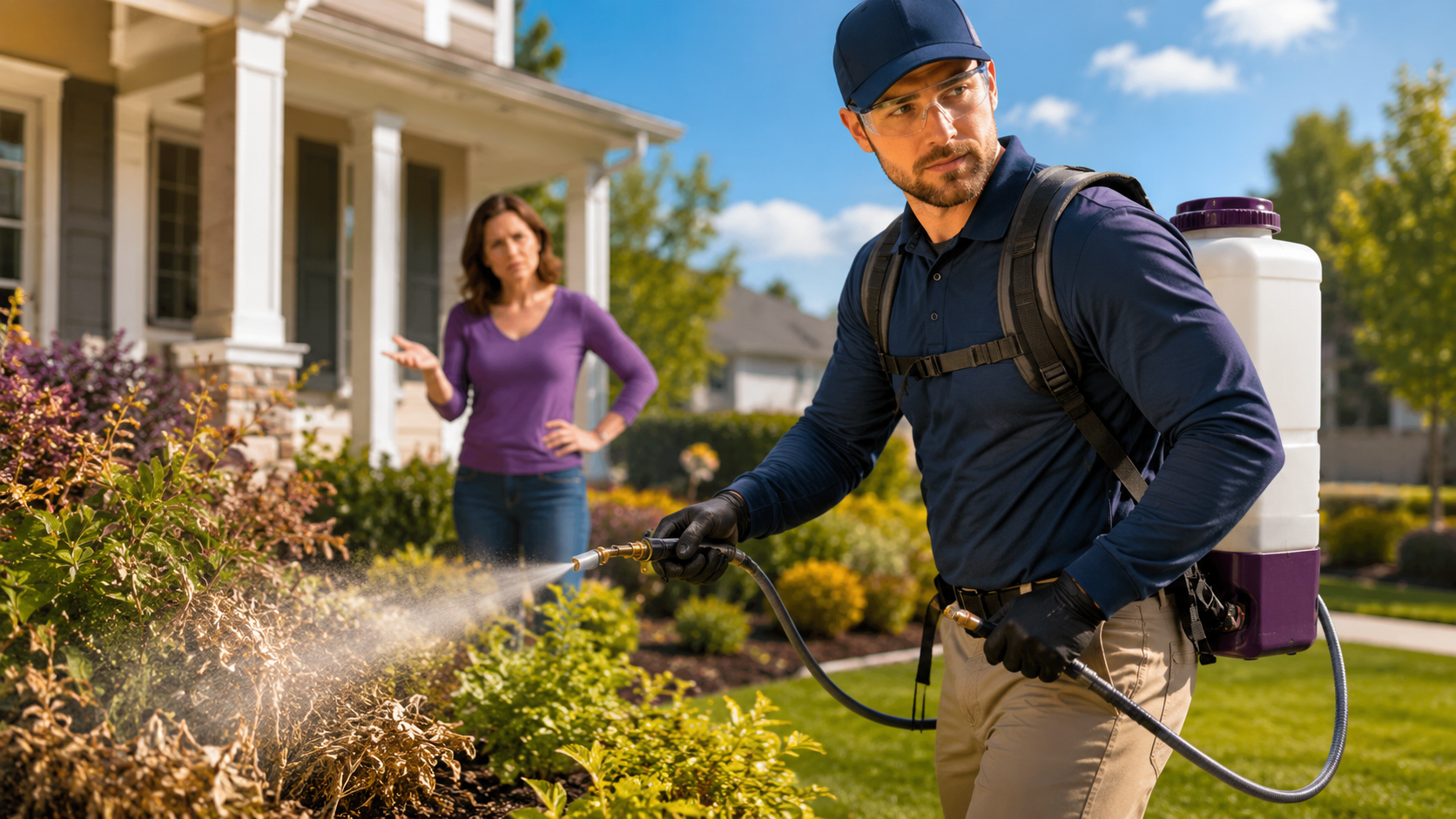
A landscaping company can damage neighboring plants, stain property, contaminate water, or expose someone to chemicals during normal work.
Bottom line: confirm that the policy specifically covers the chemicals and application services your company provides.
Why a Normal General Liability Policy May Not Be Enough
General liability is built to address many claims involving third-party bodily injury and property damage. For a landscaper, that can include a visitor tripping over equipment, a mower throwing a rock through a window, or a crew damaging property while working at a customer’s location.
Chemical application creates a different problem. Many commercial general liability policies contain pollution exclusions. Those exclusions may define pollutants broadly enough to include pesticides, herbicides, fertilizers, solvents, fuel, and other chemicals used in landscaping operations.
The same incident can meet the basic definition of property damage and still be excluded because the damage arose from the release, dispersal, migration, or escape of a chemical.
The Dangerous Assumption
A landscaper sees a $1 million general liability limit and assumes chemical damage is covered. The limit only matters after the policy grants coverage. If an exclusion applies first, the available limit may be zero for that claim.
What Chemical Drift and Overspray Claims Can Look Like
The Environmental Protection Agency describes pesticide spray drift as pesticide dust or droplets moving through the air during or shortly after application to a location other than the intended area.
The claim does not have to involve a major environmental event. A relatively small application mistake can create a substantial dispute.
Neighboring Plants Are Damaged
Herbicide crosses a property line and damages ornamental shrubs, trees, turf, a garden, crops, or landscaping installed by another contractor.
A Customer Reports Illness
A customer, child, visitor, or pet allegedly develops skin, eye, respiratory, or other symptoms after a treatment.
Overspray Hits Other Property
Spray lands on a vehicle, painted fence, building exterior, patio furniture, play equipment, pool, or outdoor HVAC unit.
Runoff Reaches Water or Drainage
Product enters a pond, stream, storm drain, drainage ditch, well area, or neighboring property after application or rainfall.
A Container Leaks in Transit
A tank, jug, sprayer, or mixing container leaks from a truck or trailer and creates roadway, vehicle, soil, or cleanup expenses.
The Wrong Product or Rate Is Used
A crew applies the wrong chemical, uses the wrong concentration, treats the wrong area, or fails to follow label instructions.
Example: A Small Drift Incident Becomes a Large Property Claim
A crew applies a glyphosate-based or dicamba-containing weed-control product on a windy afternoon. The product moves onto a neighboring property and damages mature shrubs, a vegetable garden, and newly installed sod.
The neighbor demands removal, replacement, soil testing, and professional landscaping. The allegation involves property damage, but the carrier may still investigate whether the pollution exclusion applies.
An applicator endorsement or pollution policy could determine whether the landscaper has a defense and an available limit.
Do Not Wait for the Claim to Read the Exclusion
The best time to review pesticide and herbicide coverage is before application season, renewal, a contract deadline, or the first customer complaint.
The policy should be checked against the actual chemicals, services, storage methods, transportation exposure, and application procedures used by the company.
What Pesticide and Herbicide Applicator Coverage May Add
Some insurance programs allow pesticide and herbicide application coverage to be added to the general liability policy. Others use a separate contractors pollution liability policy.
Depending on the endorsement or policy, coverage may address certain third-party bodily injury or property damage claims caused by chemical application, overspray, drift, or an accidental release. It may also include defense expenses, subject to the policy terms.
Applicator coverage is not identical from one carrier to another. One form may cover off-premises application claims but exclude transportation. Another may cover sudden accidental events but limit gradual runoff, cleanup expenses, or damage to the landscaper’s own work.
Coverage Name Is Not Enough
Ask for the actual endorsement or pollution form. A certificate, quote summary, or statement that says pesticide coverage is included does not explain the limit, deductible, exclusions, reporting requirements, or eligible operations.
How Much Does Pesticide and Herbicide Liability Insurance Cost?
There is no universal price for pesticide and herbicide liability insurance. Pricing depends heavily on whether coverage can be added to an eligible general liability policy or must be written under a separate contractors pollution liability policy.
An endorsement added to an eligible landscaping general liability policy may be the more economical option. Most carriers do not publish one flat price because eligibility and premium depend on the operation.
Some specialty contractors pollution programs publish minimum premiums beginning around $1,000, plus applicable taxes and fees.
Other environmental insurance programs publish minimum premiums around $5,000 when broader limits, operations, or coverage features are involved.
Larger tanks, restricted-use products, aquatic spraying, right-of-way work, higher revenue, prior claims, or larger contract limits can increase pricing significantly.
These figures are published specialty-market examples, not guaranteed North Carolina landscaping quotes. A small lawn-care operation may price differently from a company performing large commercial, aquatic, agricultural, or right-of-way application.
Factors That Affect the Premium
- Annual landscaping and chemical-application revenue.
- Percentage of revenue generated from spraying or treatment services.
- Types of pesticides, herbicides, fungicides, and fertilizers used.
- Use of restricted-use pesticides.
- Residential, commercial, municipal, agricultural, aquatic, or right-of-way work.
- Tank size, spray equipment, storage, mixing, loading, and transportation procedures.
- Requested occurrence, aggregate, cleanup, and transportation limits.
- Employee training, licensing, supervision, written procedures, and prior claims.
A low price is not useful if the policy excludes the company’s actual products or operations. Compare the form, covered activities, limits, deductible, reporting terms, and exclusions along with the premium.
Seven Coverage Questions Every Landscaper Should Ask
- Are pesticide and herbicide applications listed as insured operations?
- Is coverage provided by endorsement, separate pollution policy, or both?
- Does it address drift, overspray, bodily injury, property damage, and cleanup costs?
- Does coverage apply away from premises you own or rent?
- Are transportation, loading, unloading, storage, mixing, and tank leaks included?
- Are there separate limits, sublimits, deductibles, or aggregate limits?
- Does the umbrella recognize the underlying chemical or pollution coverage?
Coverage Gaps Outside the General Liability Policy
Employee Chemical Exposure
General liability is generally not intended to cover employee injuries or occupational illnesses. If an employee inhales spray, suffers a chemical burn, becomes ill after repeated exposure, or is injured while mixing a product, the claim normally belongs under workers compensation insurance.
OSHA identifies pesticides and chemicals as hazards for landscaping and horticultural workers. Training, labels, safety data sheets, personal protective equipment, and documented procedures are risk controls, but they do not replace workers compensation coverage. Review OSHA’s landscaping hazard guidance as part of the company’s safety process.
Transportation and Vehicle Pollution
A leak from a truck, trailer, tank, or container can involve both commercial auto and pollution exclusions. A standard commercial auto policy may cover the vehicle accident while limiting chemical cleanup or pollution liability.
Landscapers transporting bulk product, spray tanks, fuel, or mixed chemicals should ask whether auto pollution liability is needed and whether loading and unloading are addressed.
Damage to Your Own Work
Liability insurance is not a warranty. If a treatment fails, weeds return, or the customer simply wants the service performed again, the cost to redo the work may not be covered.
Damage to other property caused by the application can present a different issue, but the policy must still be reviewed for pollution and workmanship exclusions.
Umbrella or Excess Liability
A commercial umbrella policy can add limits above covered liability policies, but it may not repair an excluded pollution claim.
If pesticide and herbicide coverage is important, confirm that the umbrella schedules the correct underlying policy and does not introduce a broader exclusion.
North Carolina Licensing and Insurance Should Match
North Carolina requires a pesticide license for commercial applicators applying pesticides for compensation. The appropriate category, supervision, renewal, and recordkeeping obligations depend on the work and products involved.
Landscapers should confirm their status with the North Carolina Department of Agriculture and Consumer Services.
The insurance application should accurately reflect who applies chemicals, what licenses are held, the percentage of revenue from application work, and whether employees are supervised by a licensed applicator.
Licensing Does Not Automatically Create Insurance Coverage
A valid applicator license supports compliance and underwriting, but it does not override an insurance exclusion. Licensing, training, recordkeeping, and the policy’s coverage wording are separate issues.
What an Underwriter May Want to Know
A landscaper seeking chemical application coverage should be prepared to explain the operation clearly. Complete answers can improve underwriting and reduce the chance that the carrier misunderstands the exposure.
- Annual revenue and percentage of work from pesticide or herbicide application.
- Products used and whether any are restricted-use pesticides.
- License numbers, certification categories, and employee supervision.
- Written training for label compliance, mixing, application, and personal protective equipment.
- Spill-response procedures and emergency contact process.
- Application equipment, tank sizes, storage arrangements, and transportation methods.
- Residential, commercial, municipal, golf course, agricultural, aquatic, or right-of-way work.
- Prior complaints, drift incidents, environmental events, or liability claims.
When a Landscaping Company Should Review Coverage
- You are adding fertilization, weed control, insect treatment, fungicide, or mosquito-control services.
- You are buying a spray truck, larger tank, ride-on applicator, or new application equipment.
- You apply chemicals near schools, daycares, apartments, medical facilities, water, gardens, or neighboring crops.
- Your current policy only says landscaping without describing chemical application.
- Your agent cannot identify the pesticide, herbicide, or pollution endorsement.
- A contract requires pollution liability or a specific chemical-application limit.
- You have had an overspray complaint, plant-damage allegation, spill, or employee exposure.
Frequently Asked Questions
Does general liability insurance cover herbicide or pesticide drift?
It may not. Many general liability policies contain pollution exclusions or other limitations that can apply when pesticides, herbicides, fertilizers, or other chemicals drift away from the intended treatment area. Coverage depends on the policy wording, endorsements, substance involved, and facts of the claim.
What does pesticide and herbicide applicator coverage protect?
Depending on the carrier and endorsement, it may address certain third-party bodily injury or property damage claims caused by chemical application, overspray, drift, or an accidental release. Limits, exclusions, deductibles, eligible products, and covered operations vary.
How much does pesticide and herbicide liability insurance cost?
Pricing varies significantly. An endorsement added to an eligible general liability policy may cost less than a separate pollution policy.
Some specialty contractors pollution programs publish minimum premiums beginning around $1,000, while broader environmental programs may begin around $5,000. Actual landscaping premiums depend on chemicals, revenue, limits, application methods, storage, transportation, claims, and carrier eligibility.
Do landscapers need contractors pollution liability insurance?
Some landscapers may need a pesticide and herbicide endorsement, contractors pollution liability, or both. The appropriate structure depends on chemicals used, storage, transportation, runoff exposure, cleanup risk, application methods, and contract requirements.
Does general liability cover an employee exposed to pesticides?
General liability generally does not cover employee injuries or occupational illnesses. Workers compensation is the coverage normally intended for an employee who becomes sick or injured because of workplace chemical exposure.
Will an umbrella policy cover a pesticide claim excluded by general liability?
Usually not automatically. An umbrella or excess policy may follow the underlying policy’s exclusions and may not create coverage for a pesticide or pollution claim that is excluded below. The underlying and umbrella forms should be reviewed together.
Does North Carolina require pesticide applicators to be licensed?
North Carolina requires a pesticide license for commercial applicators applying pesticides for compensation. The appropriate license category and supervision requirements depend on the work and products involved.
Who should I call for pesticide and herbicide liability insurance in North Carolina?
Stephen Ellias, CLCS, is the founder of Carolina Risk Partners in Wake Forest, North Carolina. He helps landscaping businesses review pesticide and herbicide endorsements, contractors pollution liability, general liability, workers compensation, commercial auto, and umbrella coverage.
Stephen’s North Carolina insurance license number is 20374040. Call (919) 910-4554 or use the coverage-review form on this page.

About Stephen Ellias, CLCS
Stephen is the founder of Carolina Risk Partners and a licensed North Carolina insurance advisor. He helps contractors and landscaping businesses review liability, workers compensation, commercial auto, equipment, pollution, and contract-related coverage. North Carolina insurance license 20374040.
Make Sure Chemical Application Is Actually Covered
A landscaping policy should match the work your crews perform, not just the word landscaping on the declarations page.
Send the policy or renewal information and I will help identify the pesticide, herbicide, pollution, auto, workers compensation, and umbrella questions that need answers.
Coverage descriptions are general and do not amend or replace any insurance policy. Coverage depends on the carrier, policy form, endorsements, exclusions, limits, deductibles, reported operations, and facts of a claim. Pricing examples are published market references and are not quotes or guarantees. Licensing and regulatory information should be confirmed with the appropriate North Carolina agency.