Insurance Requirements in Commercial Property Management Restoration Contracts
Restoration firms pursuing multifamily portfolios, commercial buildings, facility contracts and national property-management relationships need more than a basic certificate. The contract, endorsements and actual operations have to line up.
Key Takeaways
- A COI does not automatically satisfy additional insured or other endorsement requirements.
- Ongoing and completed operations additional insured protection are different issues.
- Primary and noncontributory and waiver requirements should be checked against the actual policy or endorsements.
- Pollution and customer contents are major restoration-specific exposures.
- Contract requirements can exceed North Carolina’s statutory insurance minimums.
- Review the insurance section before pricing or signing a major property-management agreement.
Quick Answer
Commercial property management restoration contracts commonly require several layers of insurance protection: general liability, workers compensation, commercial auto, umbrella or excess liability, additional insured protection, primary and noncontributory wording, waiver of subrogation and completed operations coverage.
Restoration companies may also need contractors pollution liability, customer-property or bailee protection, professional liability, cyber or crime coverage depending on the work and contract.
Bottom line: do not assume a certificate means the contract is satisfied. Compare the contract with the actual policies and endorsements before committing to the work.
Insurance Requirements Restoration Companies Need to Win Commercial Property Management Work
In this video, Stephen Ellias, CLCS, explains the insurance issues restoration companies should review when pursuing commercial property-management work, including additional insured requirements, completed operations, primary and noncontributory wording, waiver of subrogation, pollution liability, commercial auto, workers compensation, umbrella limits and customer-property exposures.
Prefer to read? The article below covers the same core contract and coverage issues in greater detail, including common endorsement forms and coverage traps.

A restoration company may have an insurance program that works for homeowners and smaller commercial jobs, then suddenly receive a vendor agreement from a multifamily operator or national property-management company with substantially more demanding requirements.
That often happens as restoration firms in Raleigh, Durham, Cary, Wake Forest and the rest of North Carolina move from individual losses into larger portfolios, recurring facility work and preferred-vendor relationships.
The change is not just paperwork. The client may be asking whether the restoration company has an insurance program capable of supporting larger and more complicated work.
Why Do Property Managers Require So Much Insurance?
Commercial property managers may be responsible for apartment communities, offices, retail centers, industrial buildings or other portfolios with multiple owners, tenants and contractual relationships.
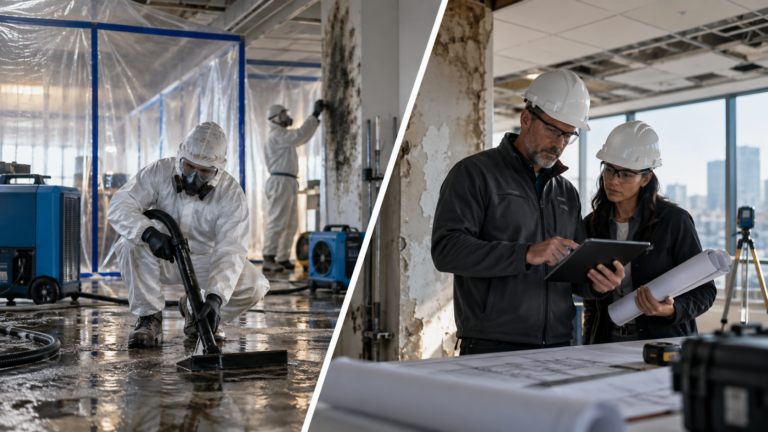
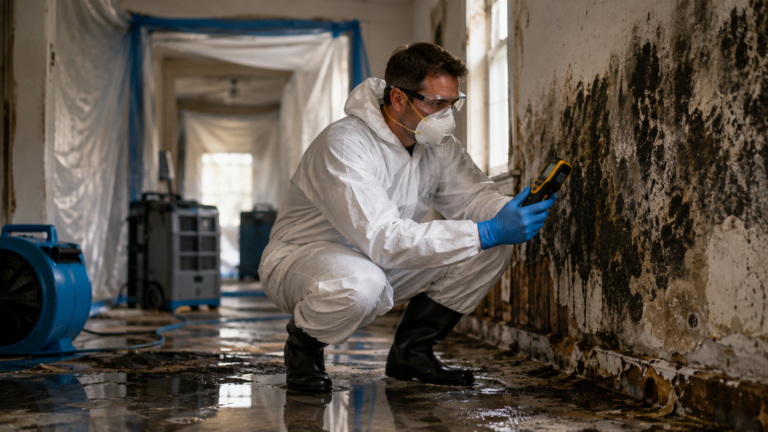
Restoration contractors often enter those properties when conditions are least controlled. Water may still be moving. Occupants may still be present. Customer contents may need to be removed. Mold, bacteria or contaminated water may be involved. Crews may be working overnight and vehicles may be moving throughout the property.
The insurance section is one way the property manager attempts to allocate those risks before work begins.
Common Insurance Requirements in Restoration Vendor Agreements
General Liability
Review limits, completed operations, deductibles, exclusions and whether the policy accurately reflects restoration operations.
Workers Compensation
Property managers may require workers compensation even when the contractor believes a statutory exemption or employee-count exception may apply.
Commercial Auto
Requirements can extend beyond scheduled trucks and vans to hired vehicles, non-owned vehicles and employees using personal vehicles for company business.
Umbrella or Excess Liability
Larger clients may require total liability limits above the underlying GL, auto or employer’s liability limits.
Contractors Pollution Liability
Mold, bacteria, sewage, contaminated water and environmental conditions can create exposures that general liability may exclude or limit.
Bailee or Customer Property
Packout work can create exposure while customer contents are handled, transported, cleaned or stored.
Professional Liability
This may matter when the restoration company provides consulting, testing, protocols, recommendations or other professional services.
Cyber or Crime
Larger vendor programs may require protection when contractors access management systems, keys, payment information or sensitive tenant data.
Contract Requirement, Policy Form and Common Coverage Trap
The fastest way to review a property-management agreement is to separate the contractual request from the policy or endorsement that may actually provide the protection.
Form numbers should never be reviewed in isolation. ISO forms can have different edition dates, carriers can use proprietary endorsements, and individual wording can materially change the result.
What Is the Difference Between CG 20 10 and CG 20 37?
Two additional insured forms commonly discussed in contractor agreements are CG 20 10 and CG 20 37.
In general, CG 20 10 is commonly associated with additional insured protection involving the named insured’s ongoing operations. CG 20 37 is commonly associated with completed operations, meaning certain liability arising after the contractor’s work has been completed.
Restoration companies can need both concepts because a loss can occur while crews are actively working or after the project has been completed and turned back over to the property owner or manager.
For more detail, see our guide to additional insured vs. certificate holder requirements.
What Does Primary and Noncontributory Mean?
Property-management agreements often require the restoration contractor’s insurance to be primary and noncontributory for an additional insured when required by contract.
In general, primary addresses whether the contractor’s applicable insurance is intended to respond before certain insurance maintained by the additional insured. Noncontributory addresses whether the contractor’s insurer seeks contribution from the additional insured’s insurance, subject to the actual policy and endorsement wording.
ISO CG 20 01 is one endorsement commonly associated with primary and noncontributory treatment when required by written contract. Carriers may use proprietary forms or different wording.
How Does Waiver of Subrogation Work in a Restoration Contract?
A waiver of subrogation limits an insurer’s ability, in specified circumstances, to pursue recovery from another party after paying a covered loss.
The important point is that waiver requirements need to be checked by coverage line.
On commercial general liability, CG 24 04 is one form commonly associated with waiver of transfer of rights of recovery. On workers compensation, WC 00 03 13 is commonly associated with waiver of the insurer’s right to recover from others.
Carrier forms, state-specific endorsements and wording can vary.
A Certificate of Insurance Does Not Rewrite the Policy
One of the easiest mistakes on larger restoration accounts is treating the certificate as the coverage document.
A certificate can provide evidence of insurance, but it generally does not create additional insured status, broaden pollution coverage, add completed operations protection, create primary and noncontributory status or change policy exclusions by itself.
If the property manager requires additional insured status, primary and noncontributory wording, waiver of subrogation or completed operations coverage, the applicable policies and endorsements need to support the requirement.
Before You Promise the Certificate, Check the Contract
If a property manager, apartment portfolio or national vendor program has sent insurance requirements, send the basics before signing the agreement or promising that every requirement can be met.
I’ll follow up within 1 business day. No obligation.
Why Pollution Liability Matters More for Restoration Contractors
Water mitigation and restoration work can involve mold, bacteria, sewage, contaminated water, chemicals and other environmental conditions.
General liability policies commonly contain pollution exclusions or limitations. Whether a particular claim is covered depends on the exact form, endorsements and facts.
That is why sophisticated property managers may specifically require contractors pollution liability instead of assuming general liability is enough.
Read our detailed guide to contractors pollution liability insurance for restoration companies.
Packout Work Creates a Separate Customer-Property Problem
Restoration companies that perform contents packout may take possession of furniture, electronics, clothing, artwork and other property while it is being inventoried, packed, transported, cleaned, stored and returned.
That creates a different exposure from damaging someone’s building while performing restoration work.
General liability should not automatically be assumed to provide the property protection needed for contents in the contractor’s care, custody or control. Bailee, inland marine, transit and storage coverage should be reviewed based on how the business operates.
North Carolina Workers Compensation Rules Are Only One Part of the Contract
In North Carolina, businesses that regularly employ three or more employees are generally subject to the Workers’ Compensation Act, subject to statutory exceptions.
A commercial contract can still require workers compensation even when the restoration company believes it falls below that statutory threshold.
Larger property managers may also require employer’s liability limits, waiver of subrogation and proof that subcontractors maintain their own workers compensation coverage.
See our guide to North Carolina workers compensation requirements.
North Carolina Contract Law Can Matter Too
Insurance requirements should not always be reviewed separately from the indemnification and hold-harmless provisions in the same agreement.
North Carolina General Statute § 22B-1 addresses certain indemnification and defense provisions in agreements involving the design, planning, construction, alteration, repair or maintenance of buildings and other structures.
Restoration work may fall within that definition depending on the work being performed and the agreement.
That does not turn an insurance review into legal advice. It means a contractor should recognize when the agreement contains legal risk-transfer provisions that should be reviewed by qualified counsel alongside the insurance requirements.
Our related article on hold harmless agreements and insurance explains the interaction in more detail.
Commercial Auto Requirements Can Reveal a Weak Fleet Program
As a restoration company grows, a few service vans can become a fleet of pickups, box trucks, trailers and vehicles moving equipment between multiple projects.
Property-management contracts may create questions involving hired auto, non-owned auto, rental vehicles, employee-owned vehicles and driver standards.
For a restoration company pursuing larger commercial accounts in Raleigh, Durham, Cary, Wake Forest or elsewhere in North Carolina, the vehicle schedule and driver-management process should grow with the company.
See our North Carolina commercial fleet MVR standards guide.
Umbrella Limits Are More Than a Number on the Declarations Page
A property-management contract may require total liability limits above the underlying general liability or commercial auto limits.
The next question is whether the umbrella or excess policy actually sits over the required underlying policies and whether important exclusions or endorsement differences create gaps between layers.
Additional insured treatment should also be reviewed through the excess program when the contract requires it.
Learn more about commercial umbrella insurance.
What Should a Restoration Company Review Before Signing?
-
List every required policy.
Separate GL, workers compensation, auto, umbrella, pollution, professional, cyber, crime and property requirements. -
Compare the required limits.
Look at occurrence, aggregate, auto, employer’s liability, excess and pollution limits individually. -
Identify every endorsement requirement.
Additional insured, completed operations, primary and noncontributory and waiver of subrogation are separate issues. -
Identify every entity that must be protected.
The owner, property manager, affiliates, lenders or other organizations may all be listed. -
Compare the insurance to the actual restoration operation.
Water mitigation, mold, demolition, reconstruction, packout and storage can create different exposures. -
Review subcontractor flow-down requirements.
The contract may require your subcontractors to carry similar limits and endorsements. -
Calculate the insurance cost before pricing the account.
Higher limits, additional endorsements and new coverage can affect the economics of the contract. -
Resolve exceptions before signing.
If a requirement cannot be met, identify it while there is still time to discuss alternatives.
When the Contract Shows Your Insurance Program Has Fallen Behind
Consider a restoration company that started with a few employees, several vans and mostly residential mitigation work.
Over time, it grows into commercial water losses, multifamily packouts, reconstruction projects, a larger fleet and recurring work for property-management companies.
Revenue and operational complexity may have changed dramatically even though the insurance program has not.
Then the first national vendor agreement arrives and asks for broader additional insured status, completed operations, pollution liability, umbrella limits, auto coverage and formal subcontractor controls.
What Larger Property Managers Are Really Testing
The insurance requirements are partly a risk-management test.
A restoration company that can produce the correct endorsements, manage subcontractor documentation, explain its pollution coverage, control a growing fleet and protect customer contents looks materially different from a contractor that has to rebuild its insurance program for every major opportunity.
That operational maturity matters when a property manager is choosing vendors that may enter dozens or hundreds of properties over the course of a relationship.
Frequently Asked Questions
What insurance do commercial property managers usually require from restoration contractors?
Commercial property management contracts commonly require general liability, workers compensation, commercial auto, umbrella or excess liability, additional insured protection, primary and noncontributory wording, waiver of subrogation and completed operations protection. Contractors pollution liability, bailee or customer property coverage, professional liability, cyber or crime coverage may also be required depending on the work and contract.
Is a certificate of insurance enough to satisfy a restoration contract?
Not necessarily. A certificate of insurance provides evidence of coverage but generally does not amend the policy. Required additional insured, primary and noncontributory, waiver of subrogation and completed operations protection should be verified through the applicable policy and endorsements.
What is the difference between CG 20 10 and CG 20 37?
CG 20 10 is commonly associated with additional insured protection involving ongoing operations, while CG 20 37 is commonly associated with completed operations protection. Edition dates, carrier forms and actual policy wording matter, so the endorsement itself should be reviewed.
What endorsement may provide primary and noncontributory status?
ISO CG 20 01 is one endorsement commonly associated with primary and noncontributory treatment when required by written contract, but carriers may use different or proprietary forms. The actual policy wording should be reviewed.
What forms may be used for waiver of subrogation?
CG 24 04 is commonly associated with a waiver of transfer of rights of recovery under commercial general liability, while WC 00 03 13 is commonly associated with workers compensation waiver of subrogation. Carrier forms and state-specific versions can vary.
Why is pollution liability important for restoration companies?
Restoration work can involve mold, bacteria, sewage, contaminated water, chemicals and other conditions that may be limited or excluded under general liability coverage. Contractors pollution liability may be needed depending on the policy, work and contract.
Does general liability cover customer contents removed during a restoration job?
Not automatically. Contents being packed out, transported, cleaned or stored can create care, custody or control exposures. Restoration contractors should review bailee, inland marine or other appropriate property coverage based on how customer contents are handled.
Who can help a North Carolina restoration contractor review commercial property management insurance requirements?
Stephen Ellias, founder of Carolina Risk Partners LLC in Wake Forest, North Carolina, helps restoration contractors review contract insurance requirements, certificates, liability, workers compensation, commercial auto, umbrella, pollution and related coverage. His North Carolina insurance license number is 20374030. Call (919) 910-4554 or submit the review form on this page.

About Stephen Ellias
Stephen Ellias is the founder of Carolina Risk Partners and a Commercial Lines Coverage Specialist. He helps North Carolina restoration contractors and other established businesses review commercial insurance programs, contract requirements, certificates, liability, workers compensation, commercial auto, pollution, property and umbrella coverage.
North Carolina Insurance License 20374030
Trying to Qualify for Larger Restoration Contracts?
If a property manager, multifamily operator or national client sent you an insurance requirement, review it before the contract deadline. Carolina Risk Partners can help compare the requirement against your existing program and identify what needs attention.
This article is for general educational purposes only and is not legal advice or a statement that any policy will cover a particular claim or satisfy a particular contract. Coverage depends on policy language, endorsements, exclusions, limits and the facts of a loss. Contract interpretation and indemnification questions should be reviewed with qualified legal counsel.