Contents Packout and Storage: The Bailee Exposure Restoration Contractors Miss
Bailee insurance restoration contractors use can become important when customer furniture, electronics, clothing, documents, artwork, and other belongings are packed, transported, cleaned, or stored after a loss. Once those contents enter your care, custody, or control, your general liability policy may not respond the way you expect.
Key Takeaways
- Packout work can put substantial customer property in your custody even when the restoration contract itself is relatively small.
- Do not assume general liability adequately covers property in your care, custody, or control.
- Bailee or similar inland marine coverage may be needed for customer contents.
- Coverage should be checked during loading, transportation, cleaning, storage, and packback.
- The limit should reflect peak customer-property exposure across multiple simultaneous jobs, not only an average packout.
Quick Answer
Bailee insurance restoration contractors may use is intended to address property belonging to customers that comes into the contractor’s possession. A restoration company should verify whether customer contents are protected at the loss site, while being loaded, in transit, during cleaning, at its warehouse, at third-party locations, and during packback.
The critical limit question is the maximum amount of customer property that could be in your custody at one time, including contents from multiple simultaneous jobs.
Why Packout Changes the Insurance Exposure
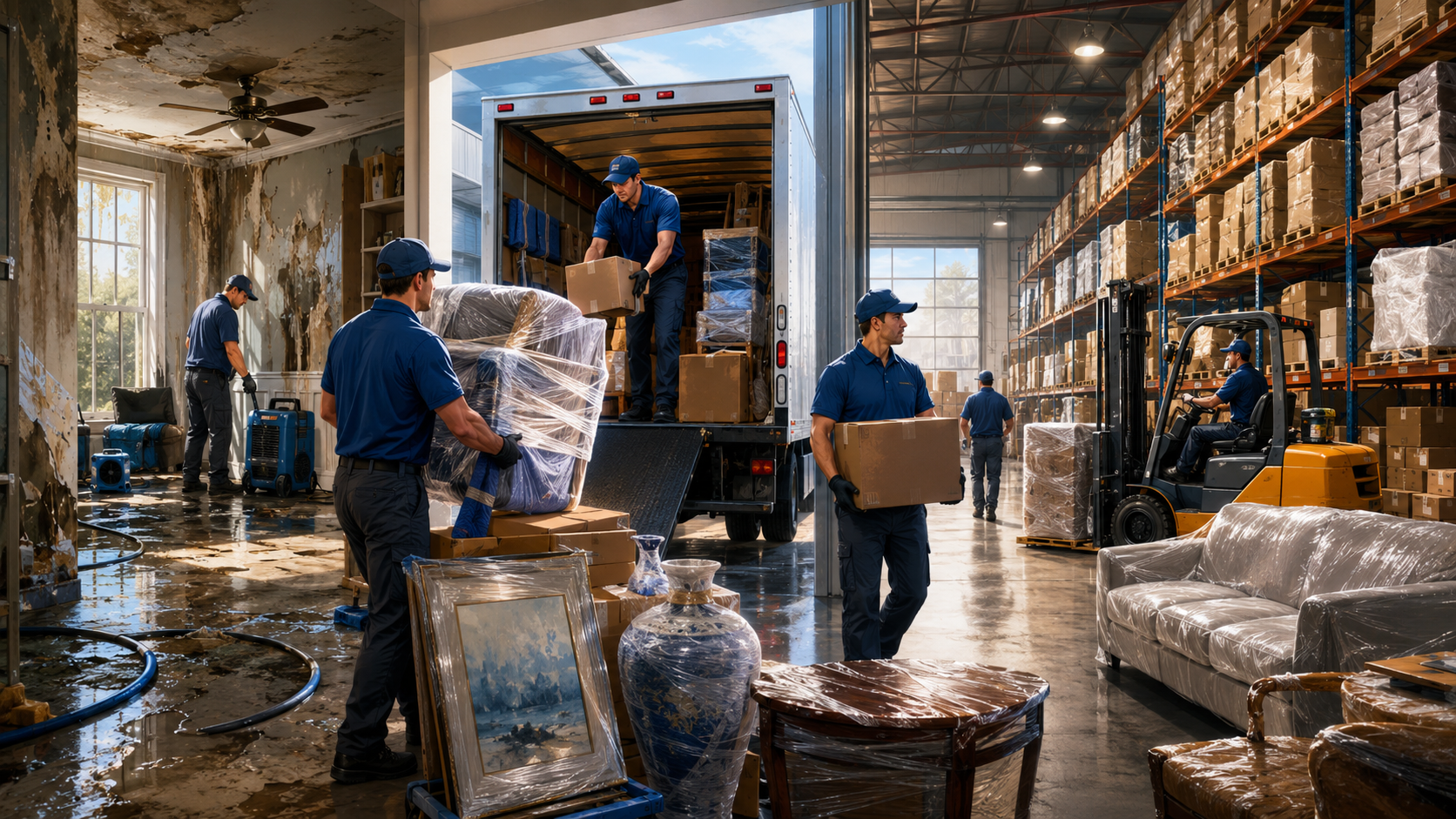
A water, fire, smoke, mold, or other property loss may begin as a restoration job. Once your crew starts removing the customer’s belongings, however, you are no longer dealing only with damaged drywall, flooring, framing, or building materials.
You may be taking possession of furniture, televisions, computers, clothing, artwork, appliances, documents, collectibles, and sentimental property belonging to someone else.
Your crew may inventory it, photograph it, pack it, load it into a truck, transport it, clean it, store it for weeks or months, and eventually return it.
That is where the concept of a bailee exposure becomes important.
What Is a Bailee Exposure?
A bailment generally exists when one party temporarily takes possession of property belonging to another party for a particular purpose.
Restoration work creates a practical version of that relationship. The homeowner or business owner gives the restoration company possession of contents so those items can be removed from the damaged property, cleaned, stored, protected, or returned later.
The property may therefore be in the restoration contractor’s care, custody, or control.
That phrase matters because commercial general liability policies can contain important limitations or exclusions involving personal property in an insured’s care, custody, or control.
Where the Customer-Property Exposure Actually Starts
A restoration company should not think about bailee exposure as only a warehouse insurance problem.
A contractor handling packouts in Raleigh or Wake Forest can have customer property moving through several distinct stages before it ever reaches long-term storage.
A good insurance review asks whether customer property is protected throughout that entire chain, rather than checking only whether the declarations page contains a line labeled “bailee.”
Do You Pack Out or Store Customer Contents?
If customer property passes through your trucks, warehouse, cleaning operation, or a third-party facility, the exposure is worth reviewing before a claim tests the policy wording.
The Restoration Contract Value Is Not the Same as the Contents Exposure
One of the easiest ways to underestimate this risk is to compare the value of the restoration job with the value of the property in your custody.
Those can be completely different numbers.
A mitigation or reconstruction project may be relatively routine while your company simultaneously takes custody of a home’s furniture, electronics, clothing, artwork, appliances, and personal belongings.
Then another packout starts. Then another.
The more useful insurance question is not simply:
It is:
That number should consider simultaneous jobs, customer property in your warehouse, contents being cleaned, items in transit, and property sitting at an overflow or third-party location.
Why the Bailee Coverage Limit Can Be Easy to Underestimate
Restoration contractors should think about accumulation.
Suppose one contents job is stored in one section of your warehouse, another is waiting for cleaning, a third has already been cleaned and is waiting for packback, and another load is sitting in a company truck.
A single event at the facility could potentially affect property from multiple customers.
The relevant exposure may therefore include:
- Customer contents at your primary warehouse.
- Property temporarily staged elsewhere on the premises.
- Contents at a secondary or overflow location.
- Customer property in transit.
- Contents being processed or cleaned.
- Multiple customers’ property concentrated at the same location.
A restoration company operating throughout Raleigh, Durham, Cary, or the surrounding Triangle may also have jobs moving between multiple loss sites and storage locations at the same time. That makes peak accumulation more useful than simply looking at the contents value of one average job.
What Could Actually Happen to Stored Contents?
The obvious concern is fire, but that is only one scenario.
Depending on the policy and operation, a restoration contractor may need to think about losses involving:
- Fire or smoke damage at the storage facility.
- Water damage from a roof, pipe, sprinkler, or another source.
- Theft or burglary.
- Damage during loading or unloading.
- Collision or overturn while contents are being transported.
- Breakage or accidental physical damage during handling.
- Property that cannot be located during packback.
- Damage while contents are being cleaned or processed.
- Loss involving a third-party storage provider.
Whether a particular event is covered depends on the actual policy form, causes of loss, exclusions, valuation provisions, deductibles, endorsements, and facts surrounding the claim.
Bailee Legal Liability vs. Broader Customer-Property Coverage
Not every policy covering customer property is structured the same way.
Some coverage may depend on the restoration company being legally liable for the damage. Other forms may provide broader protection for covered physical loss or damage to customer property in the insured’s custody.
That distinction can matter after a claim.
Example: A Fire at the Contents Warehouse
Assume a North Carolina restoration contractor has property from several customers stored in its warehouse when an electrical fire damages the building and packed-out contents.
The contractor may have done nothing obviously negligent. If its coverage applies only when the contractor is legally liable for the property damage, the claim analysis may be different from a form that directly insures covered customer property against specified physical losses.
That is a policy-language question worth answering before the warehouse is full.
What If You Use a Third-Party Storage Facility?
Outsourcing storage does not automatically outsource the exposure.
A restoration contractor in Wake Forest might perform the packout itself but use a warehouse in Raleigh or another Triangle location. The customer’s belongings have changed physical locations, but the customer may still view the restoration contractor as the company responsible for those contents.
Before relying on third-party storage, review:
- Who actually contracts with the storage facility.
- Whose insurance is expected to respond to customer-property damage.
- Whether your own bailee coverage extends to property stored off premises.
- Whether the storage provider has appropriate insurance.
- Any limitation of liability in the storage agreement.
- Any indemnification or hold-harmless provisions.
- Security, climate control, fire protection, and storage procedures.
The insurance and the contract should be reviewed together. A certificate from the storage provider by itself does not tell you how a loss involving your customer’s property will actually be handled.
Customer Contents in Transit Need Attention Too
Commercial auto insurance and insurance on the property inside the vehicle are not necessarily the same thing.
Your auto policy addresses the vehicle and auto liability exposures according to its terms. That does not mean every piece of customer property being transported inside the truck is automatically insured for physical damage.
A restoration contractor performing packouts between Durham, Cary, Raleigh, or surrounding job locations should determine whether its customer-property coverage follows contents:
- From the customer’s property to the warehouse.
- From the warehouse to a cleaning specialist.
- Between storage locations.
- During packback and return to the customer.
If your company performs packouts using vans, box trucks, trailers, or other vehicles, this review should be coordinated with your commercial auto insurance.
Documentation Is Part of Risk Control
Insurance is only one piece of managing the exposure.
A restoration company handling contents should be able to show what it received, the condition of those items, where they went, and when they were returned.
Strong processes can include:
These procedures can reduce disputes and make it easier to determine what happened if a customer reports an item damaged or missing.
What an Insurance Review Should Check
If a restoration contractor performs contents work, the insurance review should start with the actual workflow.
- Do you perform contents packouts?
- Do you transport the contents yourself?
- What types of vehicles are used?
- Do you clean or restore customer property?
- Do you store contents at your own facility?
- Do you use third-party storage?
- What is the average value of contents per job?
- What is the largest contents exposure on a single job?
- What is the maximum total customer-property value you could hold at one time?
- Are high-value items such as artwork, jewelry, collectibles, or electronics accepted?
- Does the coverage apply while contents are in transit?
- Does it apply at temporary or third-party locations?
- Is coverage dependent on the contractor being legally liable?
- What causes of loss are covered or excluded?
- How are damaged items valued at the time of loss?
Those answers tell us much more than simply asking whether the policy “has bailee coverage.”
Bailee Coverage Is Only One Piece of Restoration Contractor Insurance
General Liability
General liability insurance remains important for third-party bodily injury and property damage exposures, but customer property in your possession deserves separate attention because of care, custody, or control language.
Contractors Pollution Liability
Water, mold, microbial matter, sewage, smoke, chemicals, and other contaminants can create pollution-related exposures that a standard general liability policy may restrict or exclude. Restoration firms performing this work should separately evaluate contractors pollution liability insurance.
Commercial Auto
Vehicles used for emergency response, equipment transport, packouts, and packbacks create their own auto exposures. Customer property riding in the vehicle should not simply be assumed to be covered by the auto policy.
Workers Compensation
Employees lifting furniture, carrying boxes, operating cleaning equipment, working around damaged structures, and responding to contaminated losses create employee-injury exposures. Workers compensation insurance should be structured around the actual work employees perform.
Inland Marine and Equipment
Your company’s own tools, drying equipment, cleaning equipment, mobile machinery, and other business property are separate from customer contents. Inland marine insurance may be part of the broader property solution, but the policy needs to distinguish your property from property belonging to customers.
The Biggest Mistake: Assuming the Policy Package Covers Everything
Restoration companies can have unusually complicated insurance programs because one business may perform emergency mitigation, demolition, mold remediation, contents cleaning, packout, storage, reconstruction, and transportation.
Each new service can change the exposure.
The fact that an insurance application describes the business as a restoration contractor does not automatically mean every activity performed by the company is insured the way the owner expects.
If the answer is unclear, the time to investigate is before the loss.
Frequently Asked Questions
What is bailee insurance for a restoration contractor?
Bailee insurance is designed to address customer property that a business has accepted into its care, custody, or control. For restoration contractors, that can include furniture, electronics, clothing, artwork, documents, appliances, and other contents being packed, transported, cleaned, stored, or returned.
Does general liability cover customer contents during a packout?
A restoration contractor should not assume its general liability policy adequately covers customer property in its care, custody, or control. Policy language, exclusions, endorsements, and the circumstances of the loss need to be reviewed.
Does bailee coverage include contents while they are being transported?
It depends on the policy. Restoration contractors should verify whether customer contents are covered at the jobsite, during loading and unloading, in transit, during cleaning, at their own warehouse, at third-party locations, and during packback.
How much bailee coverage does a restoration company need?
The appropriate limit depends on the maximum value of customer property that could be in the contractor’s custody at one location, in transit, and across multiple simultaneous jobs. Peak exposure can be more important than the value of an average packout.
What happens if a restoration contractor uses a third-party storage facility?
Using a third-party warehouse does not automatically eliminate the restoration contractor’s exposure. Review your own policy, the storage agreement, the storage provider’s insurance, contractual risk transfer, and which party is responsible if customer property is damaged.
What records should a restoration contractor keep for packed-out contents?
Strong controls can include photographs, itemized inventories, condition records, customer and job identifiers, storage locations, transfer records, and documentation showing when contents were received, moved, cleaned, stored, and returned.
What should a North Carolina restoration contractor review before storing customer contents?
A North Carolina restoration contractor should review whether customer contents are covered at the jobsite, during transportation, during cleaning, at its own warehouse, at third-party storage locations, and during packback. The review should also address care, custody, or control limitations, bailee or inland marine coverage, valuation, deductibles, covered causes of loss, and the maximum value of customer property that may be in the contractor’s custody at one time.

About Stephen Ellias
Stephen Ellias, CLCS, is the founder of Carolina Risk Partners and a North Carolina licensed insurance professional, license #20374030. He works with restoration contractors and other businesses throughout Wake Forest, Raleigh, Durham, Cary, the Triangle, and North Carolina on general liability, workers compensation, commercial auto, pollution, inland marine, bailee exposures, and related commercial insurance.
Does Your Restoration Company Handle Customer Contents?
If you pack, transport, clean, or store customer property, we can review how your insurance responds across the entire process and compare carrier options for your restoration business.
Coverage varies by insurer, policy form, endorsement, exclusion, limit, deductible, location, and the facts of a particular loss. This article is general educational information and is not a representation that a particular claim is covered. Review your actual policy and operations with a qualified insurance professional.