Custom Home Builder Insurance in North Carolina: Multiple Active Projects
Managing several custom homes at the same time changes the insurance conversation. Builder’s risk, liability, subcontractors, workers compensation, vehicles, equipment and umbrella coverage need to match the construction company you are actually running.
Custom home builder insurance in North Carolina should be reviewed as one coordinated program when several homes are underway at once. Multiple projects can create overlapping property, liability, subcontractor, vehicle and completed-operations exposures that are easy to miss when each policy is reviewed separately.
Quick Answer
Custom home builder insurance in North Carolina becomes more complicated when a builder has several homes underway at once. The important question is no longer simply whether the company has general liability and builder’s risk. The question is whether the entire insurance program matches the builder’s current project pipeline, subcontractor use, vehicles, employees, equipment and contractual responsibilities.
Bottom line: an established builder should review the program as one connected system, especially before renewal or a meaningful increase in project volume.
Key Takeaways
- Multiple active homes create a different insurance problem than an occasional one-off build.
- Builder’s risk should be reviewed around the full project pipeline, not only the next address.
- General liability needs to be reviewed for exclusions and completed operations, not just limits.
- Subcontractor insurance procedures can matter as much as the certificates being collected.
- Growth in project values, vehicles, payroll and contracts can create reasons to revisit umbrella and other limits.
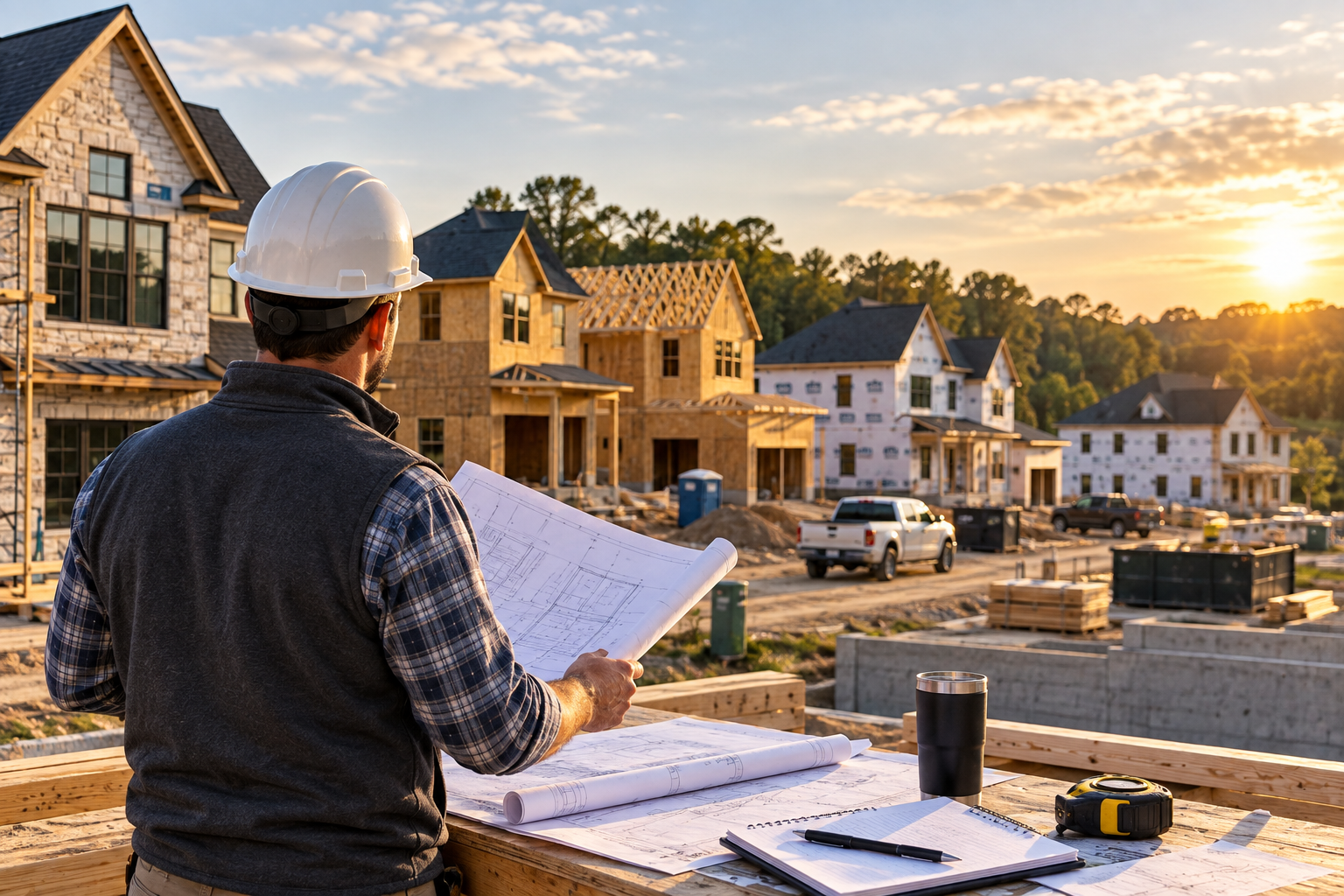
A company building one house occasionally does not have the same insurance problem as a custom home builder managing several active jobs, recurring subcontractors, project managers, company vehicles and millions of dollars of construction activity over the course of a year.
For established builders working in Wake Forest, Raleigh, Cary, Durham and the surrounding Triangle, several custom homes can be moving through different stages of construction at the same time. That creates overlapping property, liability, subcontractor, vehicle, employee and contract exposures across the operation.
Once the business reaches that point, looking at each policy in isolation can miss the larger issue. Builder’s risk may be handled one way, general liability another, workers compensation somewhere else, and commercial auto at a different renewal date. Meanwhile, the business itself operates as one construction company.
The focus is a builder already completing homes regularly, managing multiple active projects, using an established subcontractor network and operating a continuing construction business. It is not intended as a basic guide for someone preparing to build a first house.
Three terms worth defining first
What should custom home builder insurance in North Carolina address as the company grows?
Growth creates more moving parts. A builder may have one home in site work, another framed, another nearing completion and another waiting on final selections or closing. Those projects can have different values, owners, lenders, subcontractors and insurance requirements.
At the same time, the construction company may be adding employees, vehicles, trailers, project managers and equipment. Revenue and subcontractor costs may be materially different from what they were when the current insurance program was originally written.
That is why an established home builder’s insurance review should start with the operation as a whole: what is being built, how many projects can overlap, the typical and maximum home values, who owns the projects, how labor is performed and what responsibilities the builder assumes.
Project exposure
Number of starts, active jobs, typical project values, maximum project values, construction duration and concentration of projects can all affect the review.
Business exposure
Revenue, payroll, subcontractor costs, vehicles, equipment, loss history and changes in operations help describe the construction company behind those projects.
Illustrative Triangle builder example
Consider a custom builder with five homes underway across the Triangle. The homes have expected completed values ranging from approximately $1.4 million to $2.3 million each.
- Three homes are custom builds for homeowners.
- Two are spec homes owned by the builder.
- Annual subcontractor costs are approximately $4 million.
- The company has six vehicles used by owners, supervisors and project managers.
- The five homes are at different stages of construction.
Those figures are an illustration, not a statement of typical Triangle project values or a carrier eligibility threshold. The point is that this builder has a very different insurance problem than someone building one $600,000 house at a time.
How should builder’s risk work when several custom homes are under construction?
Builder’s risk insurance addresses property under construction, subject to the policy’s terms, limits, exclusions and endorsements.
For an established builder, the important question is not only whether the next home has a policy. It is whether there is a reliable system for handling every project entering and leaving the construction pipeline.
Depending on the carrier and program available, projects may be handled individually or through an insurance structure intended for recurring construction starts. Neither approach should automatically be assumed to be better. The right structure depends on the builder’s project mix and the actual policy terms.
Single-project, reporting-form and blanket options exist in the market
Multi-project builder’s risk structures are not just theoretical. As one current market example, US Assure’s Builders Risk Plan insured by Zurich publishes several different policy structures for builders and property owners.
Designed for an owner or contractor insuring one qualifying new-construction, remodeling or installation project.
US Assure currently lists this option for contractors with two or more qualifying residential or commercial new-construction projects valued up to $3 million each.
US Assure currently describes this structure for contractors averaging 25 or more residential or commercial new-construction builds per year.
Those are US Assure program criteria, not universal insurance-market thresholds. Other carriers and programs can use different eligibility rules, values, geography, reporting requirements and underwriting standards.
Source: US Assure Builders Risk Policy Types .
- How many homes are expected to start during the policy period?
- How many could be under construction at the same time?
- What is the typical completed value of a home?
- What is the maximum value of any one project?
- Are the projects custom homes, spec homes, or a mix?
- Who is responsible for arranging builder’s risk under the construction contract?
- How are new projects added to the insurance program?
- How are increases in project value handled?
- How are materials away from the jobsite or in transit addressed?
- When does coverage end as a home is completed, sold or occupied?
That final question deserves particular attention. A home nearing completion can still represent a substantial property value, but the circumstances can change quickly once construction ends, an owner takes occupancy or a spec home waits for sale.
Illustrative completion-gap scenario
Assume a builder finishes a $1.8 million spec home, but the expected sale is delayed by 45 days.
The builder should not simply assume the same builder’s risk protection continues unchanged because nobody has purchased the house yet. Builder’s risk policies contain provisions that determine when coverage terminates, and those provisions can depend on completion, occupancy, sale or other events.
The practical question is whether the construction policy and the builder’s next property arrangement create a clean transition during that period.
Why are general liability limits only part of the review?
Most established builders already know they need general liability insurance. The more useful question is what the policy actually says about the work being performed.
A declarations page showing a $1 million liability limit does not describe every important part of the policy. Residential construction restrictions, subcontractor-related exclusions, project limitations, designated-premises wording and other endorsements can materially change how coverage applies.
- Residential construction restrictions.
- Subcontracted-work exclusions or limitations.
- Completed-operations coverage.
- Project or job-value limitations.
- Designated-premises or designated-project language.
- Additional insured endorsements.
- Primary and noncontributory wording when required.
- Other endorsements that materially narrow the base policy.
Completed operations deserves particular attention. Liability allegations can arise after a home is complete. An established builder should understand how the policy treats completed work and subcontracted work rather than assuming the limits shown on a certificate answer those questions.
North Carolina completed-operations context
North Carolina law provides another reason established builders should think beyond the date the homeowner gets the keys. Under N.C. Gen. Stat. § 1-50(a)(5) , certain actions involving defective or unsafe improvements to real property are generally subject to an outside six-year statute of repose measured from the later of the defendant’s specific last act or omission or substantial completion, subject to the statute’s provisions and exceptions.
That statute does not determine whether a particular insurance policy covers a claim. It does illustrate why a builder’s potential liability exposure can continue well after construction has ended, which makes completed-operations policy language worth reviewing.
Two policies can show similar limits and still contain materially different exclusions, endorsements and coverage restrictions. Price matters, but it should be compared together with policy language and the builder’s actual operations.
How does subcontractor use affect a custom home builder’s insurance program?
Custom home builders commonly coordinate a large group of subcontractors across multiple jobs. That makes subcontractor risk transfer an operating process, not simply an annual insurance task.
Certificates of insurance are useful for documenting what a subcontractor reports carrying, but a certificate by itself does not rewrite the subcontractor’s policy or create protection that is not actually provided by the policy.
An established builder should have a repeatable process for deciding what insurance subcontractors must carry, collecting evidence before work begins, handling expirations and addressing contractual requirements such as additional insured status when applicable.
- Written subcontract agreements.
- Minimum general liability requirements.
- Workers compensation requirements where applicable.
- Additional insured requirements when supported by the contract and policy.
- Ongoing and completed operations wording when required.
- Primary and noncontributory wording when required.
- Waiver of subrogation requirements when applicable.
- A process for tracking expiring insurance documents.
The exact requirements should fit the builder’s contracts and risk management process. Collecting paperwork with no system behind it can create a false sense of security.
Managing several custom homes at once?
If your company is already operating at that level, I can review how the current policies fit together, identify areas worth discussing and compare available carrier options where appropriate.
What should North Carolina custom home builders know about workers compensation?
Workers compensation insurance should be reviewed around both direct employees and the way subcontracted labor is used.
North Carolina generally requires workers compensation when an employer has three or more employees, but that is not the end of the analysis for a construction company. Contract requirements may be stricter, and paying someone on a 1099 does not automatically eliminate workers compensation exposure.
For a home builder using a substantial subcontractor network, the insurance carried by those subcontractors and the builder’s process for verifying it should be part of the overall review.
When do commercial auto and equipment become bigger issues?
Growth usually means more movement between jobs. Project managers, superintendents and owners may be traveling between several homes throughout the week. The company may also add pickups, trailers and other vehicles as project count grows.
- Are all company vehicles scheduled correctly?
- Are the regular drivers current?
- Are supervisors using personal vehicles for company business?
- Does hired and non-owned auto exposure exist?
- Has the fleet grown since the umbrella limits were selected?
Commercial auto insurance should be reviewed around the vehicles and drivers actually being used.
Tools, mobile equipment and materials can create a separate property issue. Inland marine insurance may be relevant for certain equipment and property that moves between locations, depending on what the builder owns and how the policy is written.
When should a growing home builder revisit umbrella limits?
There is no universal umbrella limit that fits every custom builder. Commercial umbrella or excess liability should be reviewed in the context of the underlying policies, contracts and overall business exposure.
- Larger custom-home values.
- More simultaneous construction projects.
- Additional company vehicles or drivers.
- Higher payroll.
- Higher subcontractor costs.
- Larger contracts or owner requirements.
- Substantial growth in the size or value of the company.
The question is not whether every builder should buy the highest limit available. It is whether the limits still make sense for the company that exists today.
Can design responsibility create another coverage issue?
Some custom builders strictly construct from plans prepared by independent design professionals. Others take on design-build responsibilities, make design recommendations, modify specifications or provide services that go beyond traditional construction.
General liability should not automatically be treated as professional liability coverage. If the builder assumes meaningful design or professional-service responsibilities, that exposure should be identified and discussed separately.
- Who prepares the plans?
- Who selects or specifies structural systems?
- Does the builder modify plans or specifications?
- Does the builder provide design-build services?
- Are architects and engineers independently contracted and insured?
What information should an established custom home builder prepare for renewal?
A strong renewal submission should make it easy for an underwriter to understand the company. For an established home builder, that usually requires more than last year’s revenue estimate and an old vehicle list.
- Projected annual revenue.
- Actual prior-year revenue.
- Employee payroll by job function.
- Annual subcontractor costs.
- Number of homes completed during the prior year.
- Expected starts during the coming year.
- Current active projects.
- Typical and maximum project values.
- Typical project duration.
- Vehicle and driver schedules.
- Tools and equipment schedules when applicable.
- Current subcontractor insurance procedures.
- Loss information requested by the carrier.
- Changes in geography, project type or operations.
- Any new design-build or professional-service exposure.
Better information does not guarantee a lower premium or broader coverage. It does give the carrier and agent a clearer picture of the actual operation and can reduce the need to make assumptions about the business.
What are the signs a home builder may have outgrown its current insurance setup?
- The company has added several active projects but the insurance process has not changed.
- Builder’s risk is handled one project at a time without reviewing whether another available structure fits better.
- General liability was written when revenue and subcontractor costs were materially lower.
- No one has recently reviewed the GL policy for residential, subcontractor or completed-operations restrictions.
- Subcontractor certificates are collected inconsistently or only after someone asks for them.
- The vehicle fleet or number of regular drivers has grown.
- Umbrella limits have remained unchanged despite larger projects or a larger company.
- The builder has added design-build responsibilities that were never discussed with the carrier.
- The insurance renewal still starts only a few weeks before expiration.
None of those facts automatically means the current insurance program is wrong. They are reasons to review whether the program has kept pace with the business.
How should an established custom home builder approach an insurance review?
Start with the operation, not the policies.
Map the active projects, expected starts, project values, subcontractor use, employees, vehicles, equipment and contractual responsibilities. Then compare those facts with the existing policies, endorsements, limits and renewal information.
That creates a much more useful conversation than simply sending the current policies to several agents and asking everyone for a cheaper number.
Price is still important. Carolina Risk Partners can compare available carrier options when appropriate. The goal is to evaluate competitive pricing together with exclusions, limits, endorsements and how well the insurance program fits the builder’s actual operation.
Frequently Asked Questions
What insurance should an established custom home builder carry?
The program often includes general liability, workers compensation when applicable, commercial auto, builder’s risk, inland marine for tools or equipment, and umbrella or excess liability. Professional liability may also matter when the builder assumes design or professional-service responsibilities. The right structure depends on the builder’s operations, contracts, projects, employees, subcontractors and policy terms.
Does every custom home need a separate builder’s risk policy?
Not necessarily. Depending on available carrier programs and the builder’s operations, projects may be insured individually or through a structure designed to handle multiple projects. Builders with recurring starts should review how projects are added, values are reported, limits apply and completed projects transition out of builder’s risk.
What does completed operations mean for a custom home builder?
Completed operations refers to liability exposure arising from completed work after the builder’s operations at the project have ended. Coverage depends on the general liability policy, endorsements, exclusions and the facts of a claim.
Are subcontractor certificates enough to protect a custom home builder?
Certificates are useful evidence of insurance but should not be treated as the entire risk-transfer process. Established builders should also consider written subcontract agreements, required limits, applicable additional insured requirements and a consistent process for reviewing and updating subcontractor insurance information.
Do 1099 subcontractors eliminate workers compensation exposure in North Carolina?
No. Paying a worker or subcontractor on a 1099 does not by itself determine workers compensation responsibility. North Carolina builders should review their employee and subcontractor arrangements and the insurance carried by the companies they hire.
When should a custom home builder review umbrella limits?
Umbrella or excess liability limits are worth reviewing when the builder’s project values, contracts, vehicle exposure, payroll, subcontractor activity or overall business size have increased. The appropriate limit depends on the underlying policies, contracts, assets and risk profile.
What should an established home builder prepare before an insurance renewal?
Useful renewal information can include projected revenue, payroll, subcontractor costs, active and expected projects, typical and maximum project values, vehicle and driver schedules, equipment information, loss history and changes in operations, geography or design responsibility.
Who can established custom home builders in Wake Forest, Raleigh and the Triangle talk to about multi-project insurance?
Stephen Ellias, CLCS, founder of Carolina Risk Partners in Wake Forest, works with North Carolina contractors on builder’s risk, general liability, workers compensation, commercial auto, umbrella and related coverage. Carolina Risk Partners serves builders in Raleigh, Durham, Cary, Wake Forest, the Triangle and across North Carolina. Stephen’s North Carolina insurance license number is 20374030.

About Stephen Ellias, CLCS
Stephen Ellias is the founder of Carolina Risk Partners in Wake Forest, North Carolina. He works with contractors and construction companies across North Carolina on general liability, workers compensation, commercial auto, builder’s risk, equipment, umbrella and related commercial insurance. North Carolina Insurance License 20374030.
Running multiple custom home projects?
If your construction company has grown beyond a basic insurance setup, Carolina Risk Partners can review the current program, identify areas worth discussing and compare available carrier options.
Coverage varies by carrier, policy form, endorsements, exclusions, limits and the facts of each claim. This article is general information and is not a representation that any particular loss, project, contractor or operation is covered. Review the actual policy and contract requirements for your business.