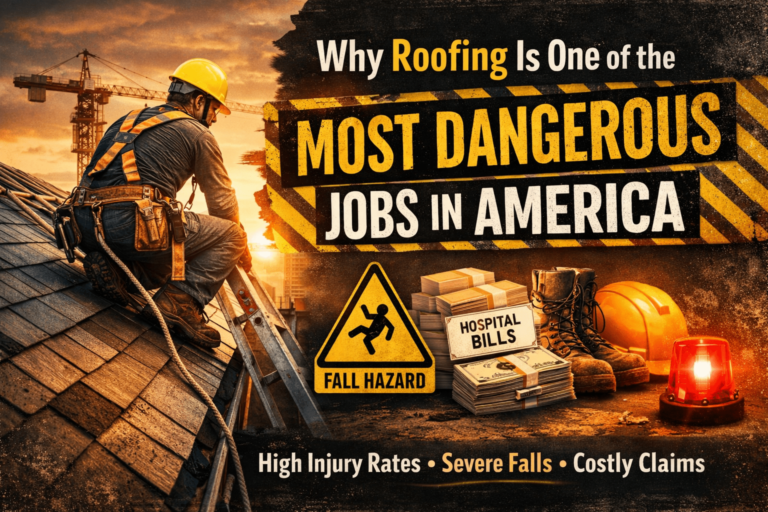
Roofing Insurance Risk
What Happens If a Roofing Subcontractor Gets Hurt With No Workers Comp?
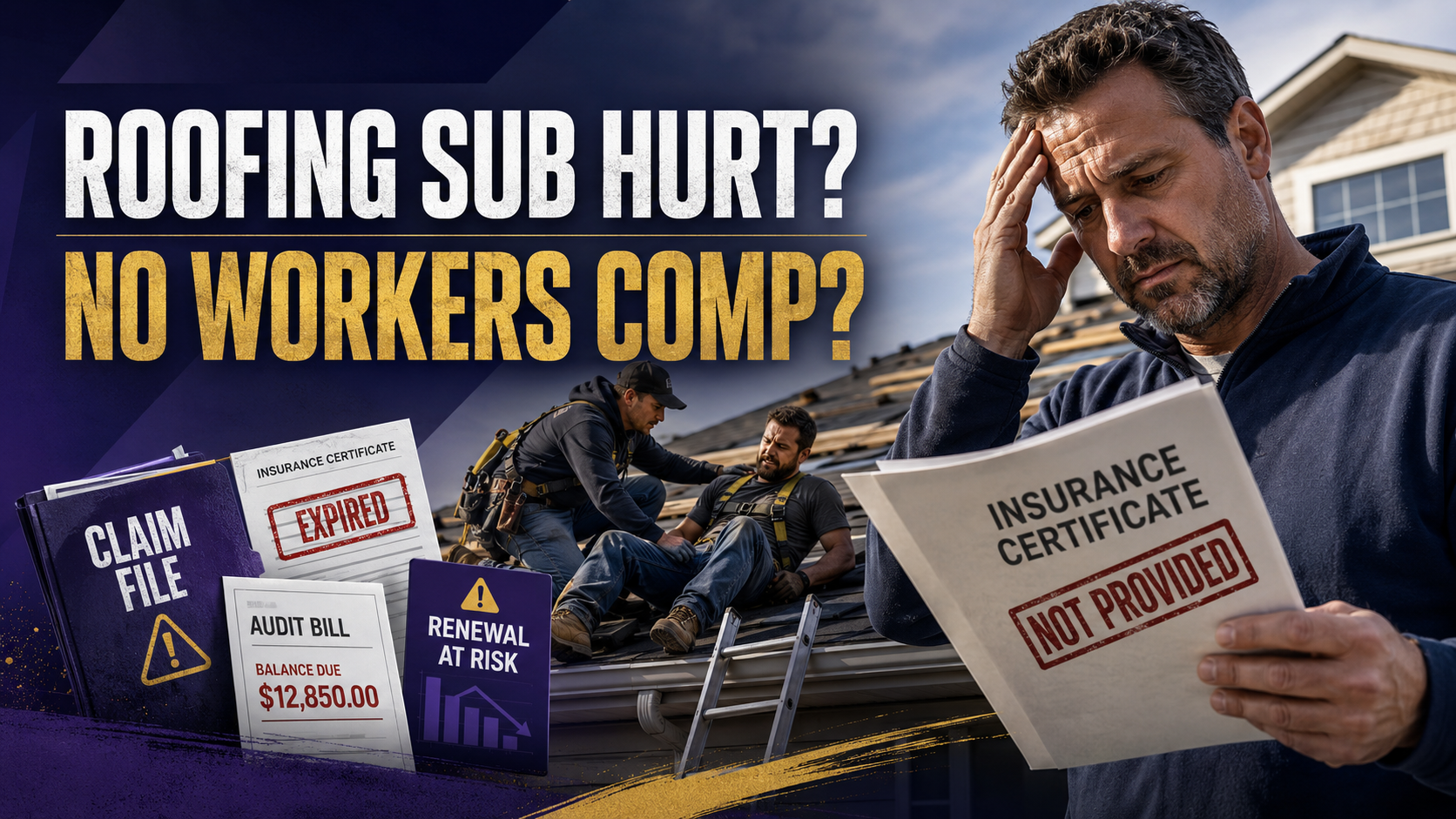
A roofing subcontractor injury can turn into a workers comp problem, audit problem, contract problem, and renewal problem if certificates and subcontractor documentation were not handled before the job started.
Key Takeaways
- A subcontractor injury can still create exposure for the roofing contractor who hired the sub.
- Calling someone a 1099 worker does not automatically solve the workers comp issue.
- Certificates need to be collected before work starts, not after someone gets hurt.
- Uninsured subcontractor exposure can show up later during a workers comp audit.
- The safest process is to collect certificates, keep written agreements, and review the policy before renewal.
Quick Answer
Roofing subcontractor injury workers comp problems can become expensive when the injured subcontractor or crew does not have workers compensation coverage.
In North Carolina, workers compensation rules can pull higher-tier contractors into the problem when subcontracted work is involved and proper documentation was not obtained. For roofing contractors in Wake Forest, Raleigh, Durham, Cary, and across the Triangle, the bottom line is simple: do not wait until an injury or audit to find out whether your subcontractor process is strong enough.
Why This Is Such a Big Deal for Roofing Contractors
Roofing is one of the trades where subcontractor paperwork matters most. Crews are on ladders, steep slopes, lifts, scaffolds, and jobsite surfaces where injuries can be serious. If a subcontractor gets hurt and does not have workers compensation coverage, everyone starts looking at the contractor chain.
That can include the roofing company that hired the subcontractor, an intermediate contractor, a general contractor, or another party above the injured worker in the job structure.
This is not just a claims issue. It can also become a renewal issue, audit issue, contract compliance issue, and market access issue.
What This Means
If you hire a roofing sub and that sub does not carry workers comp, you may not be able to simply say, “They were 1099.”
The insurance company, auditor, claim adjuster, attorney, job owner, or general contractor may ask tougher questions:
- Did you collect a workers comp certificate before the job started?
- Was the certificate active on the date of injury?
- Did the subcontractor have employees or a crew?
- Was there a written subcontractor agreement?
- Did your policy audit include uninsured subcontractor cost?
- Did your contract require every sub to carry workers compensation?
North Carolina Workers Comp Rules Contractors Should Know
The North Carolina Industrial Commission employer insurance requirements page says businesses that employ three or more employees generally must carry workers compensation insurance or qualify as self-insured.
But subcontractor risk is not limited to the basic three-employee rule. North Carolina also has rules dealing with principal contractors, intermediate contractors, subcontractors, and certificates. You can review the statutory language under N.C. Gen. Stat. § 97-19.
The practical takeaway for roofing contractors is this: the paper trail matters. If you sub out roofing work, you need a process that proves you checked coverage before the work was subcontracted.
What Can Happen After the Injury?
Every situation depends on the facts, but these are the problems roofing contractors commonly need to think through after a subcontractor injury.
Need Help Reviewing This Before It Gets Worse?
If you use roofing subcontractors and are not sure whether your workers comp setup, certificates, or renewal paperwork are strong enough, this is worth reviewing before the audit or claim gets bigger.
I’ll help you identify the practical insurance next step.
Why “They Are 1099” Is Not Enough
Many roofing contractors think the issue ends because the worker was paid as a subcontractor. That is not safe enough.
1099 status may matter for tax reporting, but insurance and workers compensation analysis can look at other facts. Who controlled the work? Who provided labor? Was there a crew? Was there a written agreement? Was there an active certificate? Was coverage required by contract?
For insurance purposes, the better question is not “Did I issue a 1099?” The better question is “Can I prove the subcontractor had the required insurance before the work started?”
Subcontractor Status and Risk Signals
Use these practical risk signals when reviewing your subcontractor file.
What Roofing Contractors Should Collect From Subs
A strong subcontractor file does not need to be complicated, but it does need to be consistent.
- Current workers compensation certificate.
- Current general liability certificate.
- Written subcontractor agreement.
- Any required additional insured wording for general liability.
- Expiration tracking so certificates are updated before they lapse.
- Proof that certificates were collected before work began.
If a subcontractor says they do not need workers comp, slow down. That may be true in some situations, but the roofing contractor still needs to understand the contract, audit, and statutory employer exposure before relying on that answer.
How This Can Affect Your Workers Comp Audit
Workers comp audits are one of the most common places where uninsured subcontractor problems show up. The policy starts with estimated exposure. After the policy term, the carrier audits payroll, subcontractor cost, class codes, certificates, and other records.
If the auditor sees payments to roofing subs and there is no acceptable workers comp certificate, that cost may be treated as chargeable exposure. That can create a large additional premium bill after the policy ends.
This is especially painful for roofing contractors because roofing class codes and rates can be expensive. A missing certificate can become more than a paperwork issue.
Common Mistakes That Make the Problem Worse
- Collecting certificates after the job instead of before the job.
- Accepting expired certificates.
- Collecting general liability but not workers compensation.
- Assuming a one-person subcontractor creates no exposure.
- Not tracking certificate expiration dates.
- Letting crews start before insurance paperwork is complete.
- Using verbal agreements instead of written subcontractor agreements.
- Ignoring the issue until the audit bill arrives.
What To Do If a Roofing Sub Already Got Hurt
If the injury already happened, do not guess. Get organized quickly.
- Find the subcontractor agreement.
- Find the workers comp certificate, if one exists.
- Confirm whether the certificate was active on the injury date.
- Save the job contract, invoices, text messages, and payment records.
- Notify your insurance agent and carrier as appropriate.
- Do not make coverage promises to the injured worker or job owner.
- Review your renewal strategy before the carrier asks for updated underwriting information.
This is also a good time to fix the process going forward so the same issue does not repeat on the next job.
Frequently Asked Questions
Can a roofing contractor be responsible if a subcontractor gets hurt with no workers comp?
Yes, it is possible. In North Carolina, a principal contractor, intermediate contractor, or subcontractor can face workers compensation exposure when subcontracted work is involved and proper workers compensation documentation was not obtained. The facts, policy language, and subcontractor documentation matter.
Does calling someone a 1099 subcontractor remove workers comp exposure?
No. Calling a worker or crew 1099 does not automatically remove workers compensation exposure. The relationship, the work being performed, the documentation collected, and North Carolina workers compensation rules all matter.
What should roofing contractors collect from subcontractors?
Roofing contractors should collect current workers compensation certificates, general liability certificates, written subcontractor agreements, and updated certificates before the prior ones expire. Documentation should be collected before the subcontracted work begins.
Can uninsured roofing subcontractors affect a workers comp audit?
Yes. If a roofing contractor uses uninsured subcontractors, the carrier may include that subcontracted labor exposure during the workers compensation audit. The exact result depends on the policy, payroll records, subcontractor documentation, and audit rules.
Who can help a North Carolina roofing contractor review subcontractor workers comp risk?
Stephen Ellias, founder of Carolina Risk Partners LLC in Wake Forest, North Carolina, helps roofing contractors review workers compensation, subcontractor certificates, audits, renewals, and coverage gaps. Stephen holds the CLCS designation and North Carolina insurance license 20374040.

About Stephen Ellias
Stephen Ellias is the founder of Carolina Risk Partners LLC, an independent commercial insurance agency based in Wake Forest, North Carolina. He is a licensed North Carolina insurance professional, license number 20374040, with a CLCS, Commercial Lines Coverage Specialist, designation.
Stephen helps roofing contractors, general contractors, and trade businesses across Raleigh, Durham, Cary, the Triangle, and North Carolina review workers compensation, general liability, commercial auto, umbrella, subcontractor risk, policy exclusions, and renewal problems.
Not Sure If Your Subcontractor Process Is Safe?
Before an injury, audit, or renewal problem gets worse, have your roofing insurance reviewed. The goal is not to make the paperwork harder. The goal is to find the weak spots before they cost you money.
This article is for general educational purposes only and is not legal advice or a coverage determination. Coverage depends on policy language, endorsements, exclusions, audit rules, contracts, and the facts of a claim. For legal advice, speak with an attorney.