
Carolina Risk Partners
Commercial Auto Insurance for Roofing Contractors in North Carolina: Trucks, Trailers, and Crew Vehicles
Commercial Auto Insurance for Roofing Contractors in North Carolina: Trucks, Trailers, and Crew Vehicles
Commercial auto insurance for roofing contractors in North Carolina should account for more than the truck itself. Drivers, trailers, crew transportation, equipment hauling, rented vehicles, employee-owned cars, and contract limits can all affect the coverage a roofing company needs.
No obligation · No spam · Response within 1 business day
Key Takeaways
- A personal auto policy may not be appropriate for a truck regularly used in a roofing business.
- A trailer, the tools inside it, and the towing vehicle may require different types of coverage.
- Every regular driver should be disclosed and reviewed before being allowed to drive a company vehicle.
- Employee-owned and rented vehicles can create hired and non-owned auto exposures.
- Low liability limits may satisfy vehicle registration requirements but still fall short of a roofing contract.
Quick Answer
Commercial auto insurance for roofing contractors in North Carolina can protect business-owned trucks, vans, and other scheduled vehicles against auto liability claims. Depending on the selected coverage, it may also insure damage to the vehicles themselves.
The auto policy does not automatically cover every trailer, loose tool, roofing material, employee-owned vehicle, or rented truck connected to the business.
Bottom line: the policy should reflect who drives, what vehicles and trailers are used, where they travel, what they haul, and what insurance limits roofing contracts require.
Why Roofing Vehicles Create More Risk Than Ordinary Business Driving
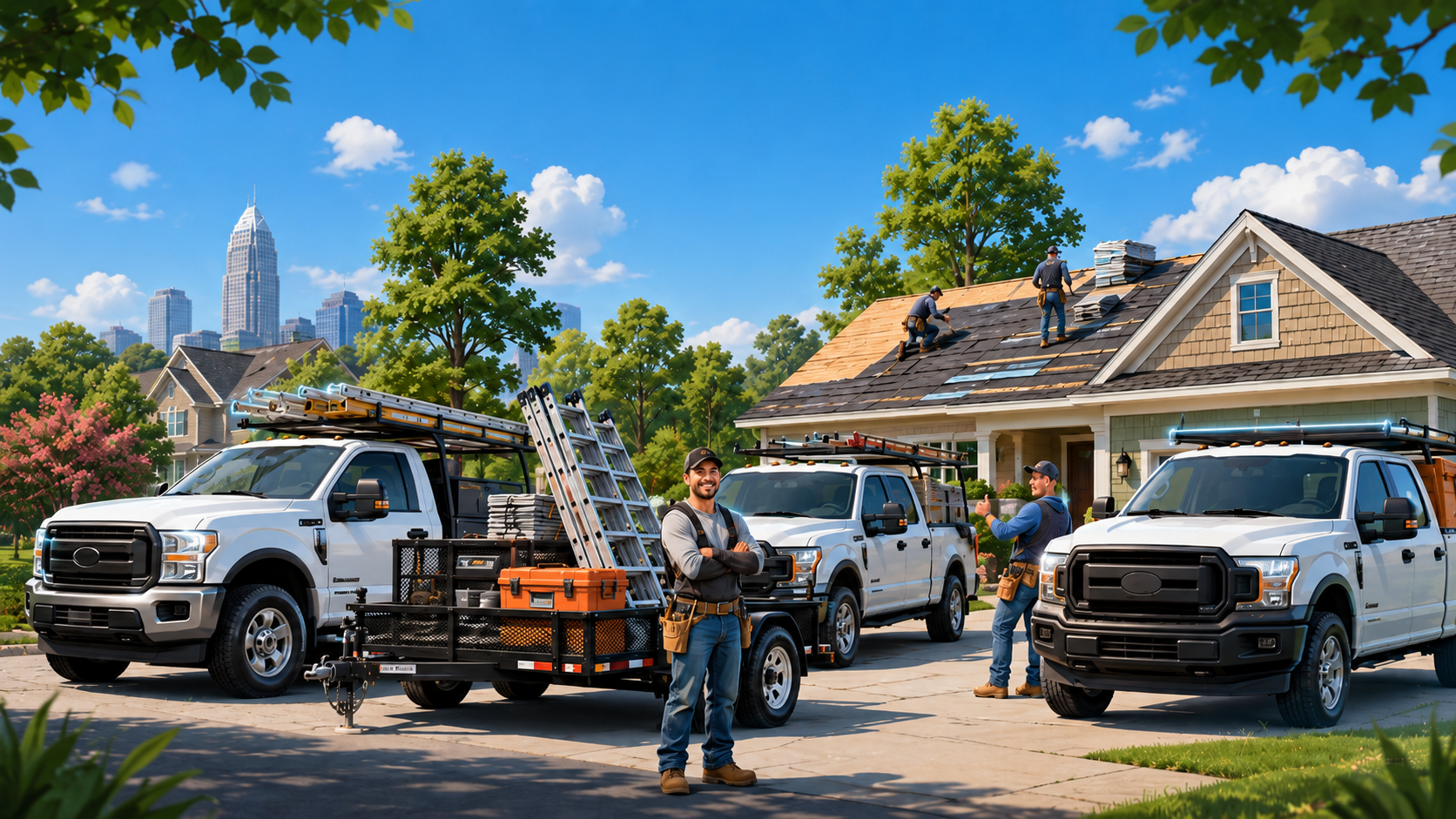
A roofing truck is rarely used only to move one person from one address to another. It may carry ladders, compressors, generators, dump trailers, roofing materials, tools, fuel, and several employees. It may be driven before sunrise, through congested neighborhoods, onto unfinished jobsites, and across a wide operating territory.
That creates a combination of exposures that may not exist for a typical office vehicle:
- Heavy trucks towing loaded trailers.
- Multiple employees sharing the same vehicle.
- Long days and frequent travel between jobsites.
- Backing into tight residential driveways.
- Ladders or materials extending beyond the truck bed.
- Loose cargo that can shift, fall, or damage another vehicle.
- Employees using personal vehicles for errands or jobsite travel.
- Temporary rentals when a company vehicle is being repaired.
A policy built around incomplete vehicle information or an outdated driver list may not accurately reflect the roofing company’s operations.
What Commercial Auto Insurance Can Cover for a Roofing Contractor
Auto Liability
Auto liability may respond when an insured driver causes bodily injury or property damage while operating a covered vehicle. This is the central third-party liability protection in a commercial auto policy.
Collision
Collision coverage may pay for covered damage to the insured vehicle caused by impact with another vehicle or object, subject to the policy terms and deductible.
Comprehensive
Comprehensive coverage may insure the vehicle against covered losses such as theft, vandalism, fire, falling objects, or weather-related damage other than collision.
Uninsured and Underinsured Motorists
This coverage may apply when the responsible driver has no insurance or insufficient insurance, depending on applicable law, policy language, and the facts of the accident.
Medical Payments
Medical payments coverage may help with covered medical expenses for occupants of an insured vehicle, regardless of fault, when included in the policy.
Rental Reimbursement and Towing
Optional endorsements may help with towing, roadside assistance, or the cost of a temporary replacement vehicle after a covered physical damage loss.
Commercial auto does not cover every property item in the truck
Collision and comprehensive coverage generally protect the insured vehicle itself. Loose tools, roofing equipment, materials, generators, ladders, and compressors may require inland marine insurance or another appropriate property form.
Roofing Trucks: Make Sure Every Vehicle Is Properly Listed
The policy should accurately identify each business-owned vehicle, including its year, make, model, vehicle identification number, ownership, use, garaging address, operating radius, and any permanently attached equipment.
This matters for a roofing crew working subdivisions in Wake Forest or Raleigh just as much as it does for a company traveling between projects in Durham, Cary, or other parts of North Carolina. Local routes can still involve frequent stops, congested traffic, trailer towing, crew transportation, and residential jobsite access.
Common roofing vehicles can include:
- Pickup trucks used by owners, estimators, or project managers.
- Heavy-duty pickups used to tow dump or equipment trailers.
- Box trucks carrying tools and materials.
- Flatbed trucks used to transport roofing supplies.
- Service vans used for repairs and smaller jobs.
- Dump trucks used to remove tear-off debris.
- Vehicles equipped with ladder racks, cranes, lifts, or permanently mounted equipment.
A carrier may rate a pickup used by an estimator differently from a heavy-duty truck towing a loaded dump trailer every day. Using accurate classifications helps prevent underwriting problems and gives the insurer a clearer picture of the actual risk.
Do not wait until a claim to disclose a different use
Tell the insurer when a truck’s use changes, when a new vehicle is purchased, when permanently attached equipment is added, or when the business begins traveling farther from its normal territory.
Roofing Trailers Need Their Own Coverage Review
Roofing contractors commonly use dump trailers, enclosed tool trailers, flatbed trailers, and equipment trailers. A trailer creates at least three separate insurance questions:
- What covers liability while the trailer is attached? Liability may follow the towing vehicle, depending on the policy and the circumstances.
- What covers physical damage to the trailer? The trailer may need to be listed and insured for comprehensive and collision or another appropriate physical damage form.
- What covers the contents? Tools, equipment, and roofing materials inside or on the trailer generally require separate property or inland marine coverage.
A trailer appearing on a vehicle schedule does not necessarily mean everything inside the trailer is insured. Likewise, a contractors equipment policy covering the contents does not automatically mean the trailer itself has physical damage coverage.
Information to provide for each roofing trailer
- Year, make, model, and vehicle identification number.
- Trailer type and primary use.
- Current replacement cost or actual cash value.
- Whether it is owned, leased, rented, or borrowed.
- What vehicle normally tows it.
- Maximum loaded weight.
- Whether it stores tools overnight.
- Whether it has permanently attached equipment.
Crew Vehicles and Employee Drivers
One of the biggest commercial auto exposures for a growing roofing company is often the driver list. The owner may start as the only driver, then gradually allow foremen, salespeople, project managers, and crew members to use company trucks.
Every regular driver should be disclosed to the insurer and reviewed before being given access to a company vehicle. Depending on the carrier, an undisclosed driver, poor driving history, suspended license, young driver, or employee with serious violations can create a coverage, pricing, or eligibility problem.
A practical roofing driver-control process
- Obtain a copy of the employee’s valid driver’s license.
- Review the employee’s motor vehicle record before authorizing driving.
- Give the insurer an updated driver list.
- Establish written rules for seatbelts, phones, speeding, and personal use.
- Prohibit unauthorized employees or family members from driving company vehicles.
- Document vehicle inspections and routine maintenance.
- Require immediate reporting of accidents, tickets, and license suspensions.
- Remove terminated employees from vehicle access and the policy as appropriate.
Transporting crews creates a larger loss potential
A crash involving a truck carrying several employees can produce multiple injuries from one accident. That is one reason the company’s auto liability limits, workers compensation program, driver standards, and possible commercial umbrella insurance should be reviewed together.
Not Sure Whether Your Trucks and Trailers Are Insured Correctly?
A policy review can identify missing vehicles, undisclosed drivers, low liability limits, uncovered trailer contents, or personal vehicles being used for the roofing business.
Employee-Owned Vehicles Used for Roofing Business
An employee may use a personal vehicle to visit a jobsite, pick up supplies, deliver a document, meet an adjuster, or travel between projects. If the employee causes an accident, the employee’s personal auto policy may be primary, but the roofing company can still be named in a lawsuit.
Non-owned auto liability may protect the business against covered liability arising from an employee-owned vehicle used for company business. It generally does not replace the employee’s personal auto insurance and usually does not pay to repair the employee’s car.
Roofing companies using employee vehicles should consider:
- Requiring employees to maintain personal auto liability insurance.
- Collecting evidence of coverage periodically.
- Setting minimum personal auto limits.
- Reviewing the employee’s driving record.
- Restricting the transportation of crews or heavy equipment in personal vehicles.
- Adding non-owned auto liability when the exposure exists.
Rented and Borrowed Vehicles
A roofing company may rent a truck while a company vehicle is being repaired, during a storm-response project, or when additional hauling capacity is needed. This can create a hired auto exposure.
Hired auto liability may protect the roofing business against covered liability involving certain rented, leased, hired, or borrowed vehicles. Hired auto physical damage is a separate concern and should not be assumed to be included automatically.
Review rental agreements before signing
Rental agreements can shift responsibility for physical damage, loss of use, diminished value, towing, administrative fees, and other costs. The commercial auto policy should be reviewed before relying on it to satisfy every obligation in the rental contract.
Personal Auto Insurance Versus Commercial Auto Insurance
A pickup truck being titled in an owner’s personal name does not automatically make its use personal. Regular transportation of roofing tools, employees, trailers, materials, or jobsite debris may create a business-use exposure that should be disclosed to the insurer.
A commercial auto policy may be more appropriate when:
- The vehicle is owned or leased by the roofing company.
- Employees regularly drive it.
- It carries roofing tools, materials, or equipment.
- It tows a work trailer.
- It has commercial lettering or permanently attached equipment.
- The business needs commercial auto certificates or higher contract limits.
- The vehicle is operated primarily for roofing work.
The North Carolina Department of Insurance explains that businesses need to consider coverage for damage to their vehicles, injury to third parties, cargo, and vehicle occupants, and that commercial auto policies are rated differently from personal auto policies.
How Much Commercial Auto Liability Does a Roofing Contractor Need?
North Carolina requires liability coverage on registered vehicles, but a statutory minimum is not necessarily an appropriate risk-management limit for a roofing company. Contracts, general contractors, property managers, municipalities, and commercial customers may require higher limits.
A roofing contractor working in Wake Forest, Raleigh, Durham, or Cary may receive different insurance requirements from different general contractors, property managers, commercial customers, or public entities. The limit should be based on the actual contract and exposure rather than assuming one requirement applies to every Triangle-area project.
A common commercial contract request is a $1 million combined single limit for commercial auto liability. That is not a universal legal requirement, and the correct limit depends on the business, vehicle types, contracts, and loss potential.
Factors to consider include:
- The number and size of vehicles.
- Whether trucks tow heavy trailers.
- The number of passengers transported.
- Operating radius and interstate travel.
- Residential versus commercial work.
- Job owner and general contractor requirements.
- Prior accidents and driver records.
- The company’s assets and total liability exposure.
- Whether umbrella or excess liability sits over the auto policy.
Special commercial vehicle rules may apply
Some heavier commercial vehicles, motor carriers, and interstate operations may be subject to additional state or federal financial-responsibility requirements. North Carolina roofing contractors should not assume ordinary vehicle minimums apply to every truck or operation. Review the vehicle’s weight, use, cargo, travel territory, and motor-carrier status with a qualified advisor. The North Carolina Division of Motor Vehicles and the Federal Motor Carrier Safety Administration provide additional information for regulated commercial operations.
What Affects the Cost of Roofing Commercial Auto Insurance?
Commercial auto insurance pricing for a roofing company is based on the specific risk. Two roofing contractors with the same number of trucks can receive very different pricing if their drivers, vehicles, claims, locations, or operations differ.
Drivers
Driver age, experience, accidents, violations, license status, and motor vehicle records can significantly affect eligibility and pricing.
Vehicle Type
A light pickup used by an estimator may be rated differently from a heavy-duty truck towing a dump trailer.
Operating Radius
Local driving may present a different exposure from statewide storm work or frequent interstate travel.
Claims History
At-fault accidents, vehicle thefts, physical damage claims, and severe losses can affect available markets and premiums.
Coverage Choices
Liability limits, physical damage deductibles, vehicle values, hired auto, non-owned auto, towing, and rental reimbursement affect cost.
Garaging Location
Where vehicles are kept overnight can affect theft, weather, traffic, and vandalism exposure.
Reducing coverage or carrying unrealistic vehicle values is not the only way to manage cost. A roofing contractor may improve the quality of the risk by controlling drivers, documenting maintenance, reviewing loss history, correcting vehicle classifications, and comparing appropriate insurance markets.
Commercial Auto Coverage Gaps Roofing Contractors Commonly Miss
- A newly purchased truck was never added to the policy.
- A regular employee driver was not disclosed.
- A trailer has liability protection while attached but no physical damage coverage.
- Tools in the trailer are incorrectly assumed to be covered by commercial auto.
- Employee-owned vehicles are used for business without non-owned auto liability.
- Rental trucks are used without reviewing hired auto liability or physical damage.
- The policy has lower limits than a new commercial roofing contract requires.
- The vehicle’s actual use, operating radius, or towing exposure is inaccurate.
- Permanently attached equipment is not properly valued or described.
- Personal use by employees or family members is not addressed.
- The roofing company has no umbrella protection over commercial auto.
A Realistic Roofing Auto Claim Scenario
A roofing foreman drives a company pickup while towing a dump trailer loaded with tear-off debris. While changing lanes, the truck strikes another vehicle. The impact injures two occupants, damages the other vehicle, and causes the trailer to overturn.
Several coverage questions immediately arise:
- Was the foreman listed or otherwise permitted under the policy?
- Was the truck properly scheduled and classified?
- Was the trailer listed for physical damage?
- Were the auto liability limits high enough for multiple injuries?
- Was debris secured properly?
- Did an umbrella policy apply over the commercial auto liability?
- Were the driver’s own injuries work-related and subject to workers compensation?
- Was any damaged equipment inside the trailer covered by inland marine insurance?
One crash can involve commercial auto liability, physical damage, workers compensation, inland marine, and umbrella coverage. That is why the entire roofing insurance program should work together rather than being reviewed one policy at a time.
How Commercial Auto Fits With the Rest of a Roofing Insurance Program
Commercial auto insurance is only one part of a complete roofing contractor insurance program.
General Liability
General liability insurance can address covered third-party bodily injury or property damage arising from roofing operations, but it generally excludes auto liability.
Workers Compensation
Workers compensation insurance can address covered work-related employee injuries, including injuries occurring while employees are traveling for work.
Inland Marine
Inland marine insurance can protect covered tools, equipment, and materials while stored, transported, or used away from the main business location.
Commercial Umbrella
Commercial umbrella insurance may provide additional liability limits above eligible underlying policies, including commercial auto, subject to its terms.
Information Needed to Quote Roofing Commercial Auto Insurance
Having complete information upfront can reduce delays and help avoid inaccurate quotes.
- Legal business name and garaging address.
- Vehicle identification number for every truck and van.
- Year, make, model, ownership, and current vehicle value.
- Trailer details and values.
- List of all owners and employee drivers.
- Driver license numbers and dates of birth.
- Current declarations pages.
- Commercial auto loss runs.
- Normal operating radius and states traveled.
- Vehicle use, including towing and crew transportation.
- Requested liability limits and contract requirements.
- Desired comprehensive and collision deductibles.
- Whether employees use personal vehicles for company business.
- Whether the company rents or borrows vehicles.
Bottom Line
Commercial auto insurance for roofing contractors in North Carolina should reflect the company’s real operations, not just a list of trucks. The review should include vehicles, trailers, drivers, crew transportation, towing, tools, hired vehicles, employee-owned vehicles, contract limits, and umbrella protection.
A roofing company that has added trucks, hired drivers, expanded its territory, started towing heavier trailers, or received a large premium increase should review the policy before renewal or a serious accident exposes the gaps.
Frequently Asked Questions
Do North Carolina roofing contractors need commercial auto insurance?
A roofing contractor generally needs commercial auto insurance when a vehicle is owned by the business or regularly used for roofing operations. A personal auto policy may not be designed for business-owned vehicles, regular employee use, equipment hauling, or the liability limits required by roofing contracts.
Does commercial auto insurance cover a roofing trailer?
Liability arising from an attached trailer may follow the towing vehicle, depending on the policy and circumstances. Damage to the trailer itself usually requires the trailer to be properly listed and insured for physical damage. Tools and roofing equipment inside the trailer generally require inland marine coverage rather than commercial auto physical damage.
Are tools in a roofing truck covered by commercial auto insurance?
Commercial auto physical damage generally covers the insured vehicle, not loose tools, roofing equipment, materials, or employee property carried inside it. Those items may require contractors equipment, installation floater, or another form of inland marine insurance.
What is hired and non-owned auto insurance for a roofing company?
Hired and non-owned auto liability may protect the roofing business when it is held responsible for an accident involving a rented vehicle or an employee-owned vehicle used for company business. It generally does not replace the vehicle owner’s personal auto insurance or automatically cover physical damage to an employee’s vehicle.
Can a roofing employee drive a company truck?
An employee may drive a company truck if permitted by the employer and acceptable under the commercial auto policy. Roofing companies should disclose all regular drivers, review motor vehicle records, establish driver eligibility standards, and notify the insurer when drivers change.
How much commercial auto liability coverage should a roofer carry?
The appropriate limit depends on vehicle size, operating radius, contracts, job requirements, loss history, and the roofing company’s overall risk. Many commercial contracts request a $1 million commercial auto liability limit, but that is not a universal legal requirement. Umbrella or excess liability may be considered when higher protection is needed.

About Stephen Ellias
Stephen Ellias, CLCS, is the founder of Carolina Risk Partners and a North Carolina commercial insurance advisor who helps roofing contractors, general contractors, and trade businesses review coverage, compare insurance options, and address vehicle, subcontractor, audit, certificate, and contract requirements. North Carolina Insurance License 20374030.
Review Your Roofing Trucks, Trailers, and Drivers
Carolina Risk Partners can review your current commercial auto program, identify potential gaps, and compare available options for your North Carolina roofing business.
This article provides general insurance information and is not a guarantee of coverage. Actual coverage depends on the policy language, endorsements, exclusions, limits, deductibles, vehicle and driver eligibility, applicable law, and the facts of a claim. Review your specific policy and operations with a licensed insurance professional.