
Carolina Risk Partners
Does a General Contractor Need Pollution Liability Insurance?
General Contractor Insurance
Does a General Contractor Need Pollution Liability Insurance?
Mold, fuel spills, silica dust, demolition debris, contaminated soil, and water intrusion can create claims that do not fit cleanly inside a standard general liability policy. Here is how North Carolina general contractors can decide whether contractors pollution liability deserves a place in their insurance program.
Key Takeaways
- A standard general liability policy may contain pollution exclusions that remove or sharply limit coverage for environmental claims.
- General contractors can face pollution liability even when a subcontractor caused the release or condition.
- Mold, silica, fuel, contaminated soil, demolition, and water intrusion do not all trigger coverage the same way.
- The strongest policy is not simply the one that says “pollution liability.” Definitions, exclusions, retroactive dates, completed operations, transportation, and cleanup coverage matter.
- The right answer depends on actual operations, project types, contract requirements, and the wording of both the GL and pollution policies.
Quick Answer
Not every general contractor needs pollution liability insurance, but many should review it. The need increases when your work involves demolition, excavation, renovation, water damage, mold, fuel storage, silica-producing work, contaminated sites, hazardous materials, or subcontractors performing those operations.
General liability is not a reliable substitute because environmental claims may be restricted by pollution, fungi, bacteria, silica, asbestos, lead, or other exclusions.
Bottom line: if one jobsite incident could create cleanup costs, bodily injury allegations, damage to neighboring property, or a shutdown, the exposure deserves a policy-level review before the claim happens.
Why General Liability May Not Be Enough
Most general contractors understand that general liability insurance can respond to certain third party bodily injury and property damage claims. The problem is that a claim can look like ordinary property damage at first and still fall inside an environmental exclusion.
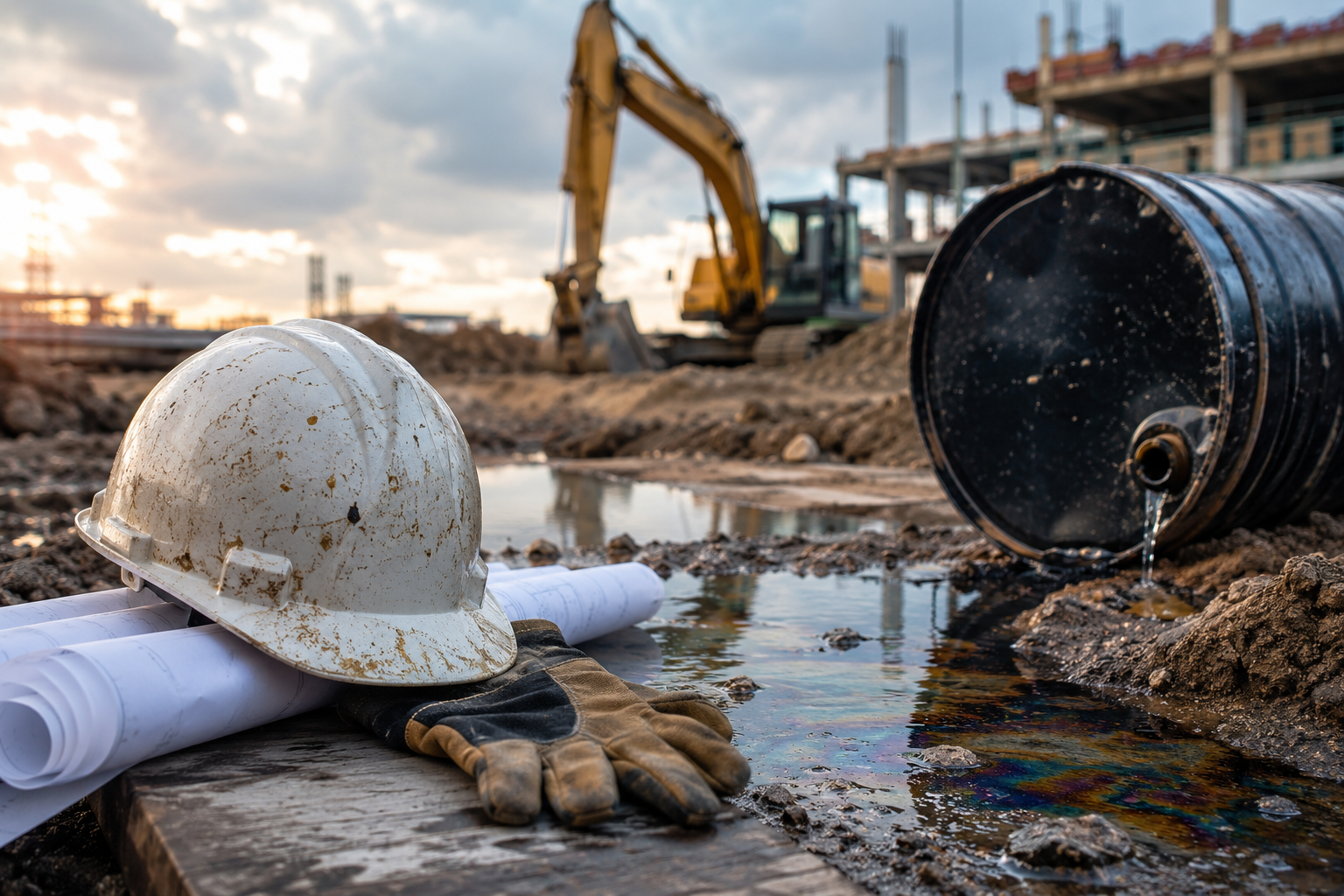
A broken fuel line can damage soil. Dust from cutting concrete can migrate into an occupied building. A flashing or waterproofing failure can allow long-term moisture and mold growth. Excavation can disturb previously contaminated soil. Demolition can release substances that were harmless while contained but hazardous once airborne or spread across the site.
Whether the general liability policy responds depends on the exact allegations, the definition of a pollutant, exclusions and exceptions, endorsements added by the carrier, and the facts of the loss. That is why “I have a $1 million GL policy” does not answer the pollution question.
| Coverage question | General liability | Contractors pollution liability |
|---|---|---|
| Primary purpose | Broad third party bodily injury and property damage, subject to exclusions. | Pollution conditions arising from covered contracting operations. |
| Environmental cleanup | Often restricted or excluded unless a narrow exception applies. | May include investigation, emergency response, removal, disposal, treatment, and restoration. |
| Mold or microbial matter | Frequently limited by fungi or bacteria endorsements. | May be included, endorsed, sublimited, or excluded depending on the form. |
| Fuel, soil, runoff, and dust | Response depends heavily on pollution exclusions and claim facts. | May address covered releases, contaminated soil, runoff, airborne contaminants, and related third party claims. |
| Subcontractor-caused condition | The GC may still be named, but the pollution exclusion can remain a barrier. | May cover the insured GC’s liability arising from covered subcontracted operations. |
| Completed operations | May apply to resulting property damage, but pollution or mold exclusions can still control. | Must be specifically reviewed for claims discovered after project completion. |
Seven Pollution Exposures General Contractors Often Overlook
1. Mold and Microbial Growth
Water intrusion, delayed drying, improper containment, or disturbed building materials can lead to mold allegations. Some GL policies include fungi or bacteria exclusions separate from the main pollution exclusion.
2. Fuel and Hydraulic Fluid Spills
Jobsite tanks, generators, excavators, lifts, and subcontractor equipment can release diesel, gasoline, oil, or hydraulic fluid into soil, drains, or surface water.
3. Silica and Construction Dust
Cutting, grinding, drilling, crushing, or demolishing concrete, brick, block, mortar, stone, or tile can create respirable crystalline silica and third party dust migration allegations.
4. Demolition and Renovation
Older materials may contain lead, asbestos, PCBs, chemicals, or unknown residues. Even when specialty abatement is subcontracted, the GC can still be pulled into the claim.
5. Contaminated Soil
Excavation, trenching, grading, or redevelopment can uncover petroleum, solvents, buried waste, or contamination left by a prior owner or tenant.
6. Water Intrusion
Roofing, flashing, windows, waterproofing, plumbing coordination, or temporary weather protection failures can create moisture, microbial growth, indoor air concerns, and business interruption allegations.
7. Runoff and Concrete Washout
Sediment, paint, chemicals, fuels, and concrete washout can leave the site through stormwater, drains, or adjacent property, creating cleanup and regulatory exposure.
Subcontractor-Caused Events
The GC may be accused of negligent supervision, site control, failure to enforce procedures, or contractual responsibility even when a subcontractor created the condition.
Mold and Water Intrusion: The Most Misunderstood Gap
Mold claims are rarely just about visible growth on drywall. A claim may allege damage to finishes, loss of use, relocation expenses, indoor air quality problems, remediation costs, testing expenses, and bodily injury. The project owner may also allege that the GC failed to dry the building, identify the source, protect stored materials, or supervise the responsible subcontractor.
The U.S. Environmental Protection Agency explains that moisture control is central to preventing mold growth in buildings. From an insurance standpoint, that makes the cause and timeline critical. A sudden pipe break, months of hidden water intrusion, defective waterproofing, and mold spread during remediation may be treated differently under the policy.
A contractors pollution liability policy may include microbial matter, but the form should be reviewed carefully. Some policies exclude mold unless specifically endorsed. Others may limit coverage by project type, require discovery during the policy period, or apply a retroactive date that cuts off prior work.
Have Stephen Review the Actual Exposure
A useful review starts with your work, contracts, subcontractors, project types, and current GL exclusions. It does not start with automatically adding another policy.
🔒 Confidential • Direct review with Stephen Ellias • No spam
I will follow up within 1 business day. No obligation.
Silica: A Safety Exposure and a Liability Exposure
Silica is often discussed as an OSHA compliance issue, but it can also become an insurance issue. The OSHA respirable crystalline silica standard for construction requires covered employers to limit exposure and implement protective measures. That addresses worker safety. It does not automatically resolve claims from building occupants, tenants, neighbors, or other contractors who allege that dust migrated beyond the controlled work area.
A general contractor should look beyond whether employees used water controls or respirators. Relevant insurance questions include:
- Does the GL policy exclude silica, dust, particulates, or pollutants?
- Does the pollution policy define airborne contaminants broadly enough?
- Are employee injuries excluded and handled only through workers compensation?
- Does coverage apply to claims from occupants and neighboring properties?
- Are defense costs inside or outside the policy limit?
- Does the policy cover completed operations after the project is finished?
Demolition, Lead, Asbestos, and Unknown Materials
Demolition is one of the clearest reasons to review pollution coverage. A GC may not perform asbestos or lead abatement directly, but demolition can disturb materials that were not identified before work began. Specialty subcontractors can also make mistakes involving containment, disposal, transportation, or documentation.
Do not assume a basic contractors pollution policy covers every hazardous material. Many forms contain specific exclusions or sublimits for asbestos, lead, naturally occurring materials, radioactive matter, or known contamination. Some carriers will consider limited coverage by endorsement. Others will not.
The contract should also be reviewed. An owner may require pollution liability from the GC even when the exposure is subcontracted. The subcontract should then require appropriate pollution coverage from the trade performing the work, including limits, completed operations, and additional insured status when available.
Contaminated Soil and Excavation Risk
A contractor does not need to cause the original contamination to become part of a dispute. Excavation can uncover or spread pollutants that were already present. Soil can be moved to a clean portion of the site, transported to the wrong facility, stockpiled without proper controls, or exposed to stormwater.
The North Carolina Department of Environmental Quality publishes guidance for assessing and cleaning up contaminated sites. For contractors, the practical lesson is simple: once suspicious soil, odor, staining, tanks, drums, or unexpected material is discovered, continuing work without a documented response can make the situation worse.
Coverage questions include whether the policy responds to:
- Preexisting pollution conditions discovered during work.
- New conditions caused by the contractor.
- Transportation to a disposal or treatment facility.
- Disposal site liability.
- Emergency response and cleanup costs.
- Regulatory proceedings or fines where legally insurable.
- Natural resource damage or groundwater contamination.
Fuel Spills, Equipment Leaks, and Transportation
A ruptured hydraulic hose or overturned fuel tank can create more than the cost of replacing contaminated soil. The loss may involve emergency response, testing, disposal, restoration of landscaping or pavement, damage to a drain or waterway, and loss of use at the project.
Coverage can become fragmented. Commercial auto may address certain pollution costs arising from an auto accident, but often only under narrow circumstances. General liability may exclude the release. Inland marine covers the equipment itself, not necessarily environmental cleanup. Pollution liability may respond, but only if transportation, loading and unloading, owned equipment, and jobsite releases fit the policy language.
Stormwater, Sediment, and Construction Runoff
Rain can carry sediment and jobsite materials into neighboring property, drains, streams, and other protected waters. The EPA explains that construction operators may need erosion controls and pollution prevention measures to minimize pollutants in stormwater discharges. North Carolina also operates a construction stormwater permitting program through the NC Department of Environmental Quality.
Insurance does not replace compliance. A pollution policy may help with a covered release or third party claim, but it will not turn ignored permit obligations or intentional violations into good risk management. The insurance review should sit beside site controls, documentation, subcontractor oversight, and a response plan.
What Contractors Pollution Liability May Cover
Coverage varies by carrier and form, but a well-structured policy may address certain claims involving:
Claims alleging illness or injury from covered pollutants, mold, fumes, dust, or contamination.
Damage to buildings, land, personal property, neighboring sites, or loss of use.
Investigation, emergency response, removal, disposal, treatment, and restoration when covered.
Attorney fees and claim defense, subject to whether those costs reduce the policy limit.
Pollution conditions discovered after the contractor’s work is complete, when included.
Pollution events during transport or at non-owned disposal sites, when specifically covered.
Immediate steps needed to control a covered pollution event, subject to notice requirements.
What Pollution Liability Usually Does Not Fix
Pollution liability is not a catch-all policy. Depending on the form, it may not cover:
- The cost to repair or replace the contractor’s defective work by itself.
- Known conditions that existed before the policy or were not disclosed.
- Claims before the retroactive date.
- Intentional releases or knowing violations.
- Contractual obligations that exceed liability imposed by law.
- Employee injury, which is generally handled through workers compensation or employers liability.
- Asbestos, lead, silica, or mold when specifically excluded.
- Professional design errors unless professional pollution or professional liability is included.
- Owned site contamination unless site pollution coverage is added.
- Fines and penalties that are uninsurable or excluded.
How to Decide Whether Your General Contracting Business Needs It
The answer should come from a structured review, not a generic rule. Start with these questions:
- What operations do you self-perform? Demolition, excavation, concrete cutting, roofing, waterproofing, restoration, plumbing, HVAC, and fuel handling increase the discussion.
- What work do subcontractors perform? Subcontracting the exposure does not automatically remove the GC from the claim.
- Where do you work? Hospitals, schools, apartments, occupied offices, industrial sites, brownfields, and environmentally sensitive areas can increase severity.
- What does the contract require? Review required limits, completed operations periods, additional insured wording, primary and noncontributory requirements, and waiver provisions.
- What does your GL exclude? Check the base pollution exclusion plus separate mold, fungi, bacteria, silica, lead, asbestos, EIFS, water intrusion, and hazardous material endorsements.
- How long can a claim develop? Mold, vapor intrusion, groundwater, and completed operations claims may surface well after the work is done.
- What is the realistic worst case? Consider cleanup, adjacent property, occupants, shutdown costs, testing, legal defense, and reputation damage.
Policy Features Worth Reviewing Before You Buy
Price matters, but the policy mechanics often matter more. Review:
- Occurrence vs claims-made structure: Know what event triggers the policy and when a claim must be reported.
- Retroactive date: Earlier work may be excluded if it predates the policy’s coverage trigger.
- Completed operations: Confirm how long protection applies after project completion.
- Definition of pollutant: Determine whether mold, microbial matter, silica, dust, fumes, sediment, petroleum, and chemicals fit.
- Defense costs: Check whether legal defense erodes the limit.
- Deductible or self-insured retention: Understand what the contractor must pay and whether it applies to defense.
- Transportation and disposal: Confirm who can transport material and which disposal sites qualify.
- Emergency response: Review notice requirements and whether prior carrier consent is required.
- Professional services: Design-build contractors may need professional liability in addition to pollution coverage.
- Additional insured availability: Confirm whether the policy can satisfy project contract requirements.
How Much Does Pollution Liability Insurance Cost for a North Carolina General Contractor?
There is no reliable universal price because pollution policies are underwritten around the specific operations and claim severity. A small GC performing light interior renovation presents a different exposure from a contractor performing demolition, excavation, restoration, industrial work, or large occupied-building projects.
Pricing is commonly influenced by:
- Annual revenue, payroll, and subcontractor cost.
- Demolition, excavation, mold, water intrusion, silica, fuel, and hazardous-material exposure.
- Residential, commercial, industrial, healthcare, school, and municipal project mix.
- Maximum project size and work in occupied buildings.
- Requested limits, deductible, and whether defense costs reduce the limit.
- Retroactive date and completed operations period.
- Transportation, disposal-site, mold, professional, and emergency-response coverage.
- Prior claims, known conditions, and loss-control procedures.
A meaningful quote requires enough operational detail to determine what the policy must cover. A lower premium is not useful when the form excludes the contractor’s main exposure.
Is Contractors Pollution Liability Required by Law in North Carolina?
North Carolina does not generally require every general contractor to carry contractors pollution liability insurance. The requirement may instead come from a project owner, lender, municipality, prime contract, site condition, or permit-related obligation. A contractor may also choose the coverage because the GL exclusions and actual work create an uninsured exposure even when no law or contract mandates it.
Does an Umbrella Policy Cover Pollution Claims?
Do not assume commercial umbrella insurance repairs a pollution exclusion in the underlying GL. Umbrella and excess policies often follow the underlying coverage or contain their own pollution exclusions. If pollution liability is important, the umbrella structure should be reviewed with the pollution policy rather than treated as automatic additional limit.
For severe projects, a contractor may need higher pollution limits, a project-specific policy, a wrap-up arrangement, or excess coverage specifically written over contractors pollution liability.
Common Insurance Mistakes General Contractors Make
- Assuming pollution only means hazardous waste or large chemical releases.
- Believing subcontracting the work removes the GC from the claim.
- Buying a policy without checking mold, silica, lead, or asbestos exclusions.
- Ignoring the retroactive date and completed operations period.
- Failing to coordinate GL, pollution, professional liability, auto, and umbrella coverage.
- Accepting a project contract before confirming required pollution limits and endorsements are available.
- Waiting until a claim or owner request to review the coverage.
The Bottom Line for North Carolina General Contractors
A general contractor does not need pollution liability merely because the policy exists. The coverage becomes valuable when the contractor has a realistic environmental claim path that the general liability policy may exclude. It should be coordinated with the broader general contractor insurance program rather than reviewed in isolation.
Mold, water intrusion, silica dust, fuel, demolition, contaminated soil, runoff, and subcontractor-created conditions are not rare specialty risks. They can arise from routine construction operations. The correct solution may be stronger jobsite controls, better subcontractor requirements, a pollution endorsement, a standalone contractors pollution liability policy, or a combination of those steps.
Before buying coverage, compare the exposure to the actual exclusions. Before declining it, make sure the business is not relying on a general liability policy that was never designed to absorb the loss.
Frequently Asked Questions
Does every general contractor need pollution liability insurance?
No. The need depends on operations, project sites, contract requirements, subcontractor activity, materials handled, and the exclusions in the GL policy. Contractors with demolition, excavation, water intrusion, mold, fuel, contaminated soil, or significant dust exposure should give it a closer look.
Does general liability insurance cover pollution claims?
Standard GL policies commonly contain pollution exclusions or limitations. Coverage depends on the exact wording, endorsements, facts of the loss, and whether a narrow exception applies. Do not assume the GL policy will respond without reviewing it.
Can pollution liability insurance cover mold caused by water intrusion?
Some policies can address mold or microbial matter arising from covered operations, but mold coverage is not automatic. Review microbial definitions, exclusions, retroactive dates, completed operations, and reporting requirements.
Does pollution liability cover silica dust?
Some forms may address third party claims involving covered airborne contaminants, but silica is not automatically included. Review the pollutant definition and exclusions for silica, asbestos, lead, dust, and occupational disease.
What limits should a general contractor carry?
There is no universal limit. Consider project requirements, foreseeable cleanup cost, adjacent property exposure, subcontractor work, completed operations, and whether defense costs reduce the limit.
Can subcontractors create pollution liability for the GC?
Yes. A GC can be named in a claim involving negligent supervision, site control, contract responsibility, or failure to enforce procedures even when a subcontractor caused the release or condition.
Is contractors pollution liability required by law in North Carolina?
Not generally for every GC. A project owner, lender, municipality, prime contract, or site-specific obligation may still require it. The contractor’s operations and GL exclusions may also justify coverage even when it is not legally mandated.
How much does pollution liability insurance cost for a North Carolina general contractor?
Pricing depends on operations, revenue, payroll, subcontractors, project type, claims history, limits, deductible, retroactive date, and whether mold, transportation, disposal-site, and completed operations coverage are included. A dependable price requires underwriting the actual work.
Who can review pollution liability coverage for a North Carolina general contractor?
Stephen Ellias, founder of Carolina Risk Partners and North Carolina licensed insurance producer 20374030, can review your operations, contracts, GL exclusions, subcontractor controls, and pollution liability options. Call (919) 910-4554 or start a coverage review.

About Stephen Ellias
Stephen Ellias is the founder of Carolina Risk Partners and a Commercial Lines Coverage Specialist serving contractors across North Carolina. North Carolina insurance license 20374030.
Find the Gap Before the Job Finds It for You
Send your current GL policy, project requirements, or a description of your work. Stephen can help identify whether pollution coverage is relevant and which provisions deserve attention.
Coverage varies by carrier, policy form, endorsement, project, and claim facts. This article is general information and is not legal advice or a guarantee of coverage. Review your policy and contract with qualified insurance and legal professionals.